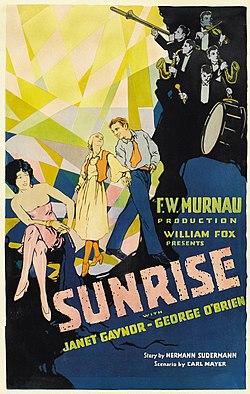
Sunrise: A Song of Two Humans
Film
Cinematography
Silent Film
4 min read
Updated By: History Editorial Network (HEN)
Published:
Updated:
Sunrise: A Song of Two Humans is a silent film directed by F. W. Murnau, recognized for its groundbreaking cinematography and narrative techniques. The film tells the story of a farmer who is seduced by a city woman, leading him to contemplate murdering his wife. However, after a moment of realization, he decides to take his wife on a trip to the city instead. This journey serves as a catalyst for the couple to rediscover their love for each other. The film is notable for its use of innovative camera work, including the use of deep focus and expressive lighting, which were advanced for its time. Murnau's direction, combined with the performances of the lead actors, creates a visual and emotional experience that resonates with audiences. The film's narrative structure, which blends realism with expressionism, allows for a deeper exploration of themes such as love, redemption, and the contrast between urban and rural life.
The impact of Sunrise on the film industry is profound, influencing future filmmakers and contributing to the evolution of cinematic storytelling. It won the Academy Award for Best Unique and Artistic Picture, highlighting its artistic merit. The film's technical achievements, particularly in cinematography, have been studied and emulated in various forms of media. Its legacy continues to be felt in contemporary cinema, where its themes and visual style are often referenced. The film is considered a classic of the silent era and remains a significant work in the history of film, showcasing the potential of the medium to convey complex emotions and narratives without the use of dialogue.
#mooflife
#MomentOfLife
#Sunrise
#F.W.Murnau
#SilentFilm
#Cinematography
#FilmHistory
Primary Reference
Sunrise: A Song of Two Humans

Explore the Life Moments of
 AI Twin