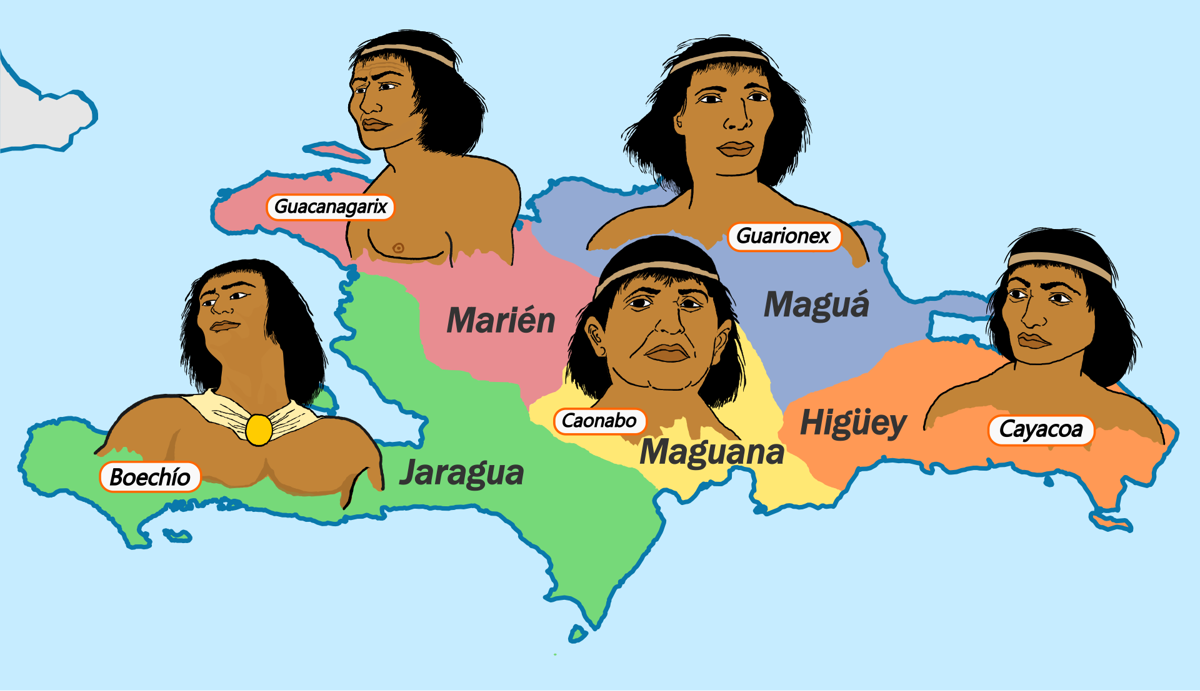
Emergence of Taíno Chiefdoms on the Island
Dominican Republic
Indigenous Culture
4 min read
Updated By: History Editorial Network (HEN)
Published:
Around the early 11th century, the island now known as the Dominican Republic saw the establishment of various Taíno chiefdoms. These chiefdoms were autonomous communities led by caciques, who were respected leaders responsible for organizing social, political, and religious affairs within their territories.
The creation of these chiefdoms marked a significant shift in the island's social structure, as it allowed for more organized governance and resource management. The caciques were instrumental in maintaining order, resolving conflicts, and overseeing agricultural production, which was the primary economic activity of the Taíno people.
Each chiefdom had its own distinct culture and traditions, but they also engaged in trade and alliances with one another. This interaction facilitated the exchange of goods, ideas, and technologies, contributing to the cultural richness of the Taíno society.
The establishment of these Taíno chiefdoms had a lasting impact on the island's history. They laid the foundation for a complex network of communities that would thrive for centuries. Additionally, their existence challenged the common misconception of indigenous societies as primitive or disorganized, highlighting the sophistication and resilience of the Taíno civilization.
Today, the legacy of these chiefdoms can still be seen in the archaeological sites and artifacts scattered throughout the Dominican Republic. They serve as a reminder of the rich cultural heritage of the Taíno people and their significant contributions to the island's history.
#Taíno #Chiefdoms #DominicanRepublic #IndigenousCulture
Primary Reference
Introduction to Taíno art (article) | Taíno | Khan Academy
Explore the Life Moments of
 AI Twin