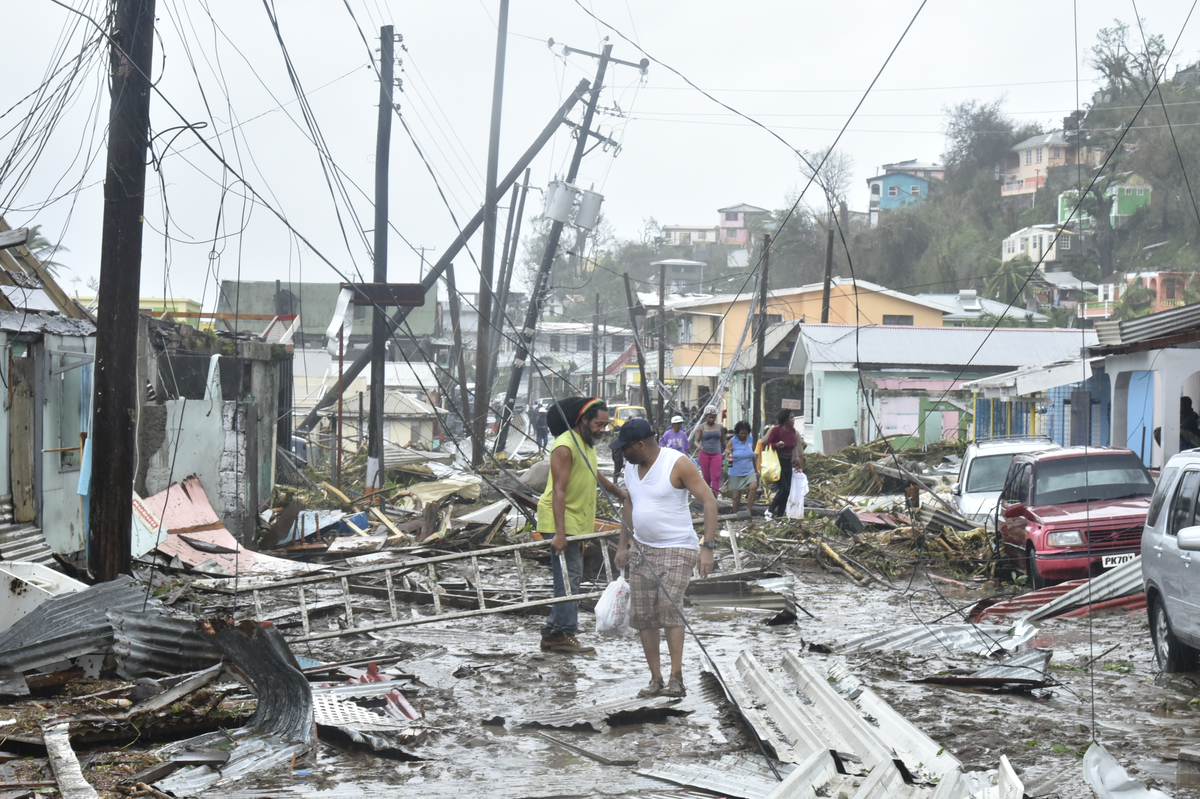
Hurricane Maria Devastation in Dominica
Dominica
Natural Disaster
Emergency Relief
4 min read
Updated By: History Editorial Network (HEN)
Published:
Updated:
Hurricane Maria struck Dominica with an unparalleled force, ranking as one of the most powerful hurricanes to impact the Caribbean nation. The storm barreled into the island, bringing catastrophic winds and rain that caused widespread devastation. With maximum sustained winds of 160 mph, Maria was classified as a Category 5 hurricane, the highest possible rating under the Saffir-Simpson Hurricane Wind Scale.
The hurricane's impact was immediate and severe. Buildings were shredded, roofs torn away, and the island's lush greenery was stripped bare. Infrastructure crumbled under the relentless assault, rendering roads impassable and communications disrupted. The agricultural sector, vital to Dominica's economy, was nearly obliterated. Crops such as bananas and citrus, vital for export and local food supply, were decimated.
The human toll was considerable. Thousands of residents were left homeless, seeking refuge in makeshift shelters. Essential services, including hospitals and clinics, were overwhelmed by the demand for medical care, complicated by the destruction of facilities. The provision of clean water and electricity became critical issues, with power lines downed and water systems inoperable.
Initial assessments estimated billions of dollars in damages, a staggering figure for the small island nation. International aid and support flowed in from various countries and organizations to assist in the recovery and rebuilding efforts. The government's immediate priorities included providing emergency relief, restoring essential services, and initiating long-term reconstruction plans to strengthen the island’s resilience against future storms.
#HurricaneMaria #Dominica #ClimateImpact #DisasterRelief #Resilience #MoofLife
Primary Reference
HURRICANE MARIA
Explore the Life Moments of
 AI Twin