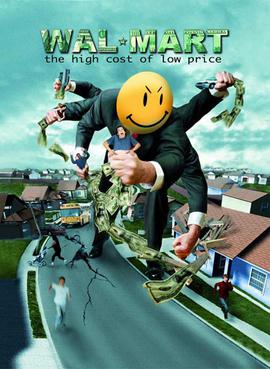
Wal-Mart: The High Cost of Low Price
5 min read
Updated By: History Editorial Network (HEN)
Published:
Wal-Mart: The High Cost of Low Price is a 2005 documentary directed by Robert Greenwald that investigates the business practices of Walmart, the world’s largest retailer, and the social consequences of its low-price, high-profit model. The film presents a blistering critique of how the company treats its employees, its impact on small businesses, its overseas labor practices, and the burden it places on taxpayers through underpaid workers who rely on public assistance.
Told through interviews with former employees, small business owners, community leaders, and Walmart suppliers, the documentary paints a picture of systemic exploitation. Workers speak about low wages, poor healthcare coverage, union-busting tactics, and grueling conditions. Shop owners describe how local economies were gutted after Walmart’s arrival. The film also exposes the company's use of sweatshop labor in developing countries and highlights cases of environmental violations and gender discrimination lawsuits.
Visually, the film is fast-paced and accessible, using infographics, hidden-camera footage, and direct-to-camera testimonies. It mixes emotional appeals with investigative reporting, drawing a clear line between corporate decisions and real-world human cost. There’s no subtlety in its approach—the film is advocacy-driven and unapologetically confrontational.
Released through a grassroots campaign rather than major theatrical channels, Wal-Mart: The High Cost of Low Price was shown in thousands of community-organized screenings across the U.S. It never had a commercial box office run but reached millions through DVD sales and online distribution. It was praised for mobilizing public discourse about corporate accountability, though critics from the business sector dismissed it as one-sided and lacking nuance.
The film’s legacy lies in its role as a catalyst for awareness and activism. It contributed to growing pressure on Walmart to address issues like wage fairness and sustainability. Wal-Mart: The High Cost of Low Price remains a landmark example of political documentary filmmaking designed not just to inform, but to organize and provoke action.

Explore the Life Moments of
 AI Twin