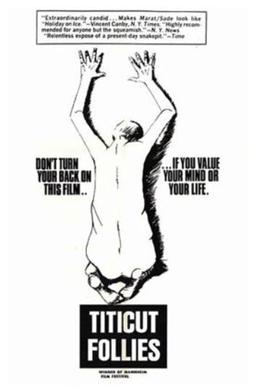
Titicut Follies
5 min read
Updated By: History Editorial Network (HEN)
Published:
Titicut Follies is a 1967 documentary directed by Frederick Wiseman, offering a brutal, unfiltered look inside the Bridgewater State Hospital for the Criminally Insane in Massachusetts. Filmed in black-and-white and shot cinéma vérité style, the film captures the treatment of inmates—many of whom suffer from severe mental illness—and exposes the dehumanizing conditions, systemic neglect, and bureaucratic indifference that defined institutional care during that era.
The title refers to a talent show staged by staff and inmates, which bookends the film and provides a grim contrast to the footage in between. The bulk of the documentary shows force-feedings, strip searches, apathetic therapy sessions, and humiliating interactions between guards, doctors, and patients. One of the most harrowing scenes involves an emaciated inmate being force-fed through a tube, naked, and barely responsive—illustrating the complete loss of dignity these individuals endured.
Wiseman uses no narration, no interviews, and no music. His camera simply observes, allowing the audience to witness the daily routine without editorializing. The editing is clinical and methodical, creating a rhythm that mimics the monotony and institutional coldness of the environment. This stark neutrality makes the brutality all the more disturbing.
Upon release, Titicut Follies was immediately met with controversy. Massachusetts officials sued to block the film, claiming it violated patient privacy. In 1969, a court banned it from public screening—the first and only American film ever officially censored for reasons other than obscenity or national security. It remained largely unseen for decades until the ban was lifted in 1991, following legal challenges and shifting views on transparency in public institutions.
Although it had no commercial release during its initial run, the film gained a legendary reputation and became essential viewing in academic, legal, and mental health circles. It is now widely regarded as a milestone in documentary history and one of the most powerful critiques ever made of the American mental health system.
Titicut Follies is not entertainment—it’s an indictment. It shattered illusions about institutional care and set a new ethical bar for observational filmmaking. Its legacy endures as a raw, essential record of human suffering ignored in plain sight.

Explore the Life Moments of
 AI Twin