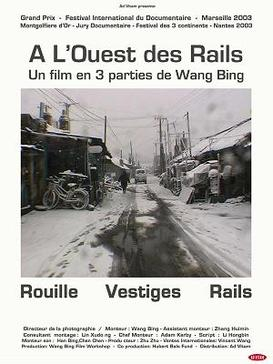
Tie Xi Qu: West of the Tracks
5 min read
Updated By: History Editorial Network (HEN)
Published:
Tie Xi Qu: West of the Tracks is a 2003 Chinese documentary directed by Wang Bing, widely considered one of the greatest achievements in observational cinema. Spanning over nine hours, the film documents the slow collapse of the Tiexi industrial district in Shenyang, a once-thriving hub of state-owned factories in northeastern China. Shot between 1999 and 2001, the film is divided into three parts—“Rust,” “Remnants,” and “Rails”—each focusing on different layers of life within the decaying industrial complex.
“Rust” captures the disintegration of factory life, with workers facing layoffs, crumbling infrastructure, and the erasure of decades of socialist industry. “Remnants” follows the families living in nearby worker housing, showing how job loss and uncertainty ripple through domestic life, affecting education, family ties, and the hope for the future. “Rails” shifts to the teenage boys hanging around the train tracks, scraping by through petty theft and junk scavenging, a portrait of youth adrift in the ruins of a once-structured society.
Wang Bing uses a handheld digital camera, adopting a slow, immersive style with long takes and no narration, creating a deeply intimate and meditative atmosphere. The film’s visual tone is grey, cold, and claustrophobic, matching the bleakness of the urban decay it portrays. Its unflinching realism and duration push the boundaries of documentary storytelling, immersing the viewer in the rhythm of slow economic death.
Premiering at the 2003 International Documentary Film Festival Amsterdam (IDFA), the film won the Grand Prize at the Marseille Festival of Documentary Film. It did not have a theatrical box office run in the conventional sense but circulated through film festivals, universities, and art house circuits, gaining critical recognition worldwide. Tie Xi Qu is now regarded as a landmark of 21st-century documentary cinema—a brutal, elegiac record of China’s transition from socialism to capitalism and the human cost buried beneath its economic rise.

Explore the Life Moments of
 AI Twin