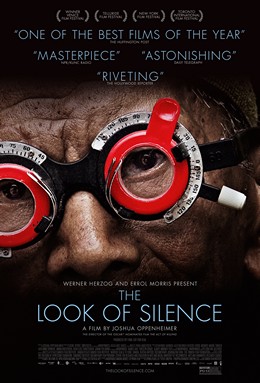
The Look of Silence
5 min read
Updated By: History Editorial Network (HEN)
Published:
The Look of Silence is a 2014 documentary directed by Joshua Oppenheimer, serving as a powerful companion piece to his earlier film The Act of Killing (2012). While The Act of Killing focused on the perpetrators of Indonesia’s 1965–66 anti-communist genocide, The Look of Silence shifts the lens to the victims—specifically to Adi Rukun, an optometrist whose older brother was brutally murdered during the mass killings. Through Adi’s calm but piercing confrontations with the men responsible, the film exposes the banality of evil and the deep scars left on Indonesian society by a genocide that still goes largely unacknowledged.
The documentary unfolds with quiet intensity. Adi travels from village to village under the pretense of giving eye exams, using the opportunity to speak directly to those involved in the killings. He asks questions they rarely hear: why they did it, if they feel guilt, and whether they knew his brother. These exchanges are unnerving—often met with laughter, denial, or threats—and the silence in the film’s title reflects both the survivors’ long-forced muteness and the national refusal to reckon with the past.
Visually, the film is restrained but elegant. Oppenheimer frames each shot with deliberate stillness, creating a stark contrast between the calm surface and the horror lying underneath. The cinematography uses natural light and static compositions to build a meditative but unsettling atmosphere. The score is minimal, allowing long pauses and facial expressions to carry the emotional weight.
Premiering at the 2014 Venice Film Festival, The Look of Silence won the Grand Jury Prize, FIPRESCI Prize, and the Human Rights Nights Award. It went on to earn an Academy Award nomination for Best Documentary Feature and won numerous international awards, including a BAFTA for Best Documentary. Though it was not widely released in Indonesia due to security concerns, underground screenings were held throughout the country, offering a rare moment of reflection for citizens unable to speak openly about the atrocities.
The Look of Silence is widely regarded as one of the most important documentaries of the 21st century. It delivers a devastating exploration of memory, justice, and trauma, not through spectacle or outrage, but through quiet, unwavering moral clarity.

Explore the Life Moments of
 AI Twin