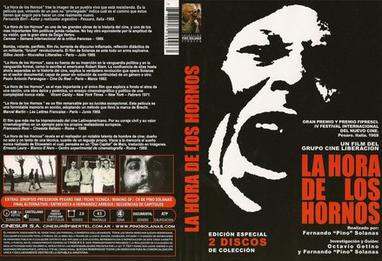
The Hour of the Furnaces Released
Documentary
Political Film
Cinematic Influence
4 min read
Updated By: History Editorial Network (HEN)
Published:
Updated:
The Hour of the Furnaces, a political documentary directed by Octavio Getino and Fernando Solanas, emerged as a pivotal work in the landscape of Latin American cinema. This film was part of a broader movement in the 1960s and 1970s, where documentary filmmaking was increasingly viewed as a tool for political activism. The film critiques neocolonialism and capitalism, addressing the socio-political issues faced by Latin American countries. It combines documentary footage with a narrative that emphasizes the struggles of the oppressed, aiming to awaken political consciousness among viewers. The film's structure interweaves theoretical discourse with visual imagery, making it a unique contribution to the genre of political cinema. Its release marked a turning point, inspiring a generation of filmmakers to explore similar themes and adopt a more critical approach to storytelling in their works.
The impact of The Hour of the Furnaces extended beyond its immediate audience, influencing not only filmmakers but also activists and scholars. The film's bold stance against imperialism and its call for social justice resonated with many, leading to discussions about the role of art in political movements. It became a reference point for subsequent generations, highlighting the potential of documentary film as a means of social critique and change. The film's legacy is evident in the continued exploration of political themes in Latin American cinema, as well as in the global documentary movement that seeks to address issues of inequality and injustice. The Hour of the Furnaces remains a significant work that exemplifies the power of film as a medium for political expression and social transformation.
#mooflife
#MomentOfLife
#PoliticalDocumentary
#LatinAmericanCinema
#Neocolonialism
#SocialJustice
#FilmHistory

Explore the Life Moments of
 AI Twin