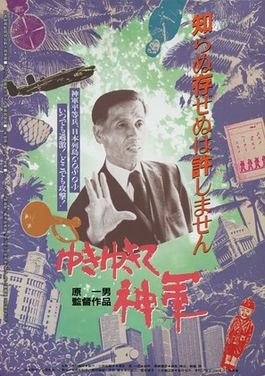
The Emperor's Naked Army Marches On
5 min read
Updated By: History Editorial Network (HEN)
Published:
The Emperor's Naked Army Marches On is a 1987 Japanese documentary directed by Kazuo Hara, centered around Kenzo Okuzaki, a 62-year-old World War II veteran on a relentless quest to expose wartime atrocities committed by the Japanese Imperial Army in New Guinea. The film follows Okuzaki as he confronts former officers and soldiers in an effort to uncover the truth behind the execution of two soldiers from his unit after Japan’s surrender. What begins as a personal mission transforms into a raw and confrontational indictment of state violence, blind obedience, and the enduring silence around Japan’s wartime legacy.
Okuzaki is an extraordinary documentary subject—unpredictable, abrasive, and at times physically violent. He uses every tactic possible to force confessions, from relentless questioning to outright ambushes, often dragging elderly ex-soldiers out of their homes. His methods are morally uncomfortable, but the emotional impact is undeniable. The title itself reflects Okuzaki’s belief that the emperor, whom he once attempted to assassinate, bears ultimate responsibility for Japan’s war crimes.
The film is shot in an unadorned, vérité style. Hara follows Okuzaki with minimal interference, allowing the events to unfold with a mixture of absurdity, horror, and dark humor. There’s no score, no narration—just raw footage of confrontations, awkward silences, and bursts of rage. The emotional volatility and ethical ambiguity give the film a unique intensity, blurring the lines between activism, journalism, and madness.
The Emperor’s Naked Army Marches On received critical acclaim internationally, winning the Caligari Film Award and the Prize of the Ecumenical Jury at the 1987 Berlin International Film Festival. Though it was controversial in Japan and largely ignored by mainstream audiences at the time, it developed a lasting reputation as one of the most fearless political documentaries ever made.
Its legacy lies in its refusal to sanitize history or its protagonist. The film is as much about the trauma of war as it is about the disturbing cost of moral clarity. It remains a searing example of documentary as confrontation—one that refuses to let the past stay buried.

Explore the Life Moments of
 AI Twin