Shoah
4 min read
Updated By: History Editorial Network (HEN)
Published:
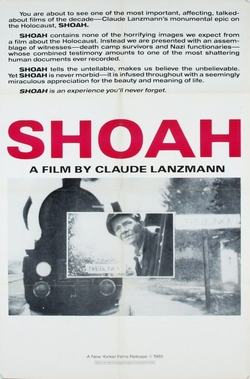
Shoah is a 1985 French documentary directed by Claude Lanzmann, widely regarded as one of the most important films ever made about the Holocaust. Running over nine hours long, the film forgoes archival footage entirely and instead relies on first-hand testimony from survivors, former Nazis, and witnesses to the genocide. Shot over a period of more than a decade, Shoah presents a methodical and unflinching examination of the systematic extermination of Jews by Nazi Germany, focusing in particular on the death camps of Treblinka, Auschwitz, and Chelmno, and the massacres in Eastern Europe.
Lanzmann employs a distinctive interview style, pressing his subjects for precise recollections, often revisiting traumatic memories in painful detail. He pairs these interviews with present-day footage of the locations where the atrocities occurred, allowing the empty landscapes to speak to the silence and absence left behind. The absence of archival footage was a deliberate choice—Lanzmann argued that no image could properly represent the horror, and only testimony could preserve the truth.
Upon release, Shoah received widespread critical acclaim for its depth, scope, and uncompromising approach. It was awarded the New York Film Critics Circle Award for Best Documentary and received a special award from the Los Angeles Film Critics Association. Though not submitted for the Academy Awards due to its length and release format, it later received an honorary Oscar in 2013. The film had limited commercial release due to its runtime but has been broadcast and screened globally in academic, cultural, and historical contexts.
Its legacy is monumental. Shoah is often considered required viewing in Holocaust education and has influenced countless other films, books, and courses on genocide and memory. It remains one of the most thorough cinematic examinations of the Holocaust ever produced.

Explore the Life Moments of
 AI Twin