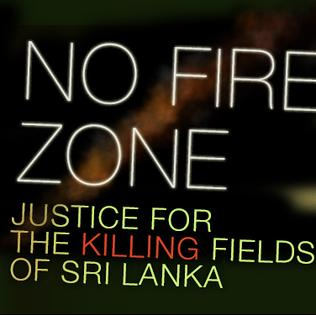
No Fire Zone: In the Killing Fields of Sri Lanka
War
5 min read
Updated By: History Editorial Network (HEN)
Published:
No Fire Zone: In the Killing Fields of Sri Lanka is a 2013 documentary directed by British journalist Callum Macrae, investigating the final months of the Sri Lankan Civil War in 2009, during which tens of thousands of Tamil civilians were allegedly massacred by government forces. The film is built around mobile phone footage, eyewitness testimonies, and leaked military videos, many of which are graphic and disturbing, showing executions, shelling of hospitals, mass graves, and the targeting of civilians inside designated “No Fire Zones.”
Macrae constructs the documentary chronologically, tracing the Sri Lankan military's advance into the shrinking territory held by the Liberation Tigers of Tamil Eelam (LTTE), where hundreds of thousands of civilians were trapped. The film centers on documented war crimes, including sexual violence, deliberate attacks on aid workers, and the execution of surrendering rebels. The footage is often shaky, pixelated, and brutal, reinforcing the raw, on-the-ground nature of the evidence. Much of it was filmed by victims, survivors, or even soldiers, making it both damning and deeply intimate.
The documentary premiered at the 2013 Cannes Film Festival and was screened at the UN Human Rights Council. It received global attention and was instrumental in prompting calls for independent investigations into war crimes in Sri Lanka. It won several awards, including the Best Documentary at the One World Human Rights Film Festival and the International Emmy for Current Affairs in 2014. The film was banned in Sri Lanka, and the government repeatedly denied its allegations, calling the footage fake and accusing the film of supporting terrorism.
Despite limited commercial release, No Fire Zone became one of the most influential human rights documentaries of its decade. It was screened privately for diplomats, activists, and policymakers, contributing to international pressure on the Sri Lankan government. Its legacy lies in its role as both documentation and advocacy—serving as visual evidence of war crimes and as a powerful call for accountability in a conflict largely hidden from global view.
Primary Reference
No Fire Zone: In the Killing Fields of Sri Lanka

Explore the Life Moments of
 AI Twin