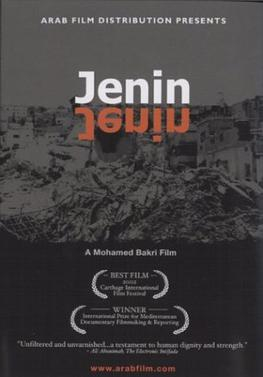
Jenin, Jenin
5 min read
Updated By: History Editorial Network (HEN)
Published:
Jenin, Jenin is a 2002 Palestinian documentary directed by Mohammed Bakri, focusing on the aftermath of the Israeli military incursion into the Jenin refugee camp in April 2002 during Operation Defensive Shield. The film captures testimonies from Palestinian residents who lived through the assault, which was widely reported to have resulted in extensive destruction, civilian casualties, and alleged war crimes. Rather than presenting a balanced or investigative view, the film functions as an unfiltered platform for the voices of Jenin’s survivors, offering their emotional and often harrowing accounts of what they experienced.
Shot in a direct, handheld style with minimal production, the film creates an urgent, on-the-ground feel. It avoids narration or interviews with Israeli officials, which sparked immediate controversy. Testimonies describe demolished homes, missing family members, and allegations of atrocities. Bakri includes little visual evidence beyond the wreckage and the faces of his subjects, instead relying on personal narrative as the core of the film’s power.
Upon release, Jenin, Jenin was banned in Israel by the Film Ratings Board on the grounds of alleged distortion and bias. This ban was eventually overturned by the Israeli Supreme Court in 2004, citing freedom of expression. Still, the film remained deeply polarizing, hailed in some circles as a brave act of resistance and condemned in others as propaganda. Legal battles surrounding defamation and censorship continued for years, and in 2021, Bakri was ordered to pay damages to an Israeli soldier who sued over the film’s portrayal.
The documentary had limited theatrical release but circulated widely through film festivals, activist screenings, and underground distribution, especially in the Arab world and among international human rights groups. It received a Special Jury Award at the Carthage Film Festival and was praised for its emotional resonance despite its controversial framing.
Jenin, Jenin remains one of the most contentious and politically charged documentaries of the early 21st century. Its impact lies not in cinematic technique but in its refusal to compromise or dilute its subject’s suffering, serving as a flashpoint in the broader discourse on narrative, trauma, and control over representation in the Israeli-Palestinian conflict.

Explore the Life Moments of
 AI Twin