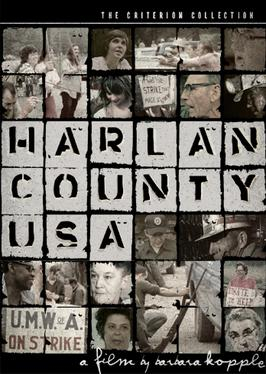
Harlan County, USA
5 min read
Updated By: History Editorial Network (HEN)
Published:
Harlan County, USA is a 1976 documentary directed by Barbara Kopple that captures a violent and emotionally charged coal miners' strike in Harlan County, Kentucky. The film follows the 1973 Brookside strike, where members of the United Mine Workers of America (UMWA) clashed with Duke Power Company over dangerous working conditions, low wages, and the company’s refusal to sign a union contract. What begins as a local labor dispute unfolds into a raw, deeply human portrait of class struggle in rural America.
Kopple embedded herself within the striking community for over a year, documenting not just the confrontations between miners and company thugs, but also the resilience of their families—especially the women, who emerge as the backbone of the resistance. Armed with shotguns and bullhorns, these women stand on picket lines, organize food drives, and refuse to be intimidated. The film includes scenes of physical violence, death threats, and tense courtroom hearings, all captured in handheld, cinéma vérité style.
The soundtrack—composed of Appalachian folk and protest songs—adds emotional weight to the film’s depiction of generational poverty and resistance. Kopple avoids voice-over narration, allowing the participants’ voices to speak for themselves. The result is a visceral, immersive experience that places the viewer directly in the struggle, surrounded by fear, solidarity, and defiance.
Harlan County, USA premiered at the New York Film Festival and went on to win the Academy Award for Best Documentary Feature in 1977. Though its theatrical run was modest, it became a staple in classrooms, labor circles, and political film screenings. Critics praised its raw honesty and emotional power, and it remains one of the most influential labor documentaries ever made.
The film’s legacy is enduring—it helped reignite public attention to labor issues and inspired generations of activists and filmmakers. In 1990, it was selected for preservation in the U.S. National Film Registry by the Library of Congress for its cultural, historical, and aesthetic significance. It stands as a definitive chronicle of working-class struggle in America.

Explore the Life Moments of
 AI Twin