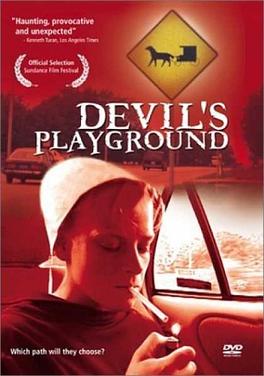
Devil's Playground
5 min read
Updated By: History Editorial Network (HEN)
Published:
Devil’s Playground is a 2002 documentary directed by Lucy Walker that examines the little-known rite of passage known as Rumspringa within the Amish community. The film focuses on the lives of Amish teenagers in Indiana who, at around age 16, are allowed to leave their strict religious world and experience the modern, secular lifestyle—drinking, partying, dating, and even using drugs—before deciding whether to return to the church and commit to baptism.
The documentary follows several teens, particularly Faron, a charismatic preacher’s son who quickly spirals into drug dealing and legal trouble. Through his story and others, the film explores the enormous cultural gulf between the insular, rule-bound Amish life and the chaotic freedom of the outside world. The tension lies in the choice each teen must eventually make: whether to return to a life of religious conformity and family or stay in the “English” world and risk exile from their entire community.
Visually, the film blends vérité-style footage with occasional interviews, capturing both the innocence and recklessness of the Rumspringa period. Scenes jump from quiet Amish farms to loud keg parties, highlighting the jarring contrast between the two worlds. The tone is restrained and nonjudgmental, allowing viewers to observe without editorial intrusion. The film avoids caricature, instead offering a nuanced view of the emotional, spiritual, and psychological stakes each teen faces.
Premiering at the Sundance Film Festival, Devil’s Playground received critical acclaim and several award nominations, including an Independent Spirit Award and an Emmy for Outstanding Cultural and Artistic Programming. While not a box office hit, it became widely discussed in educational and cultural circles for its rare, intimate access to a community that typically shuns cameras and outside scrutiny.
The film’s legacy lies in its humanization of a misunderstood group and its exploration of identity, freedom, and belonging. Devil’s Playground is not just about religion—it’s about what it means to choose your life, and what that choice costs when it comes with the threat of losing everything you’ve ever known.

Explore the Life Moments of
 AI Twin