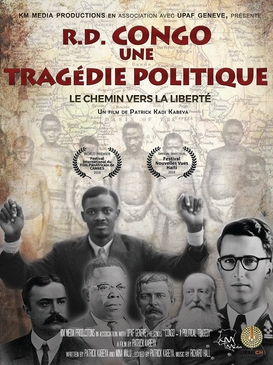
Congo – A Political Tragedy
5 min read
Updated By: History Editorial Network (HEN)
Published:
Congo – A Political Tragedy is a 2018 documentary directed by Patrick Kabeya that explores the complex and violent history of the Democratic Republic of the Congo, tracing its journey from colonization through independence, dictatorship, and continued political instability. Unlike many Western-made documentaries on African conflicts, this film is created by Congolese filmmakers and focuses on the internal political struggles, the legacy of foreign intervention, and the failures of post-colonial leadership.
The film opens with the brutal colonial exploitation under King Leopold II of Belgium, setting the stage for a country systematically stripped of its resources and dignity. It then covers the rise and assassination of Patrice Lumumba, the Congo’s first democratically elected prime minister, whose death in 1961 marked the beginning of decades of foreign-backed dictatorship. From Mobutu Sese Seko’s long rule to the devastating wars of the 1990s and the presidency of Joseph Kabila, the film outlines a relentless pattern of betrayal, corruption, and violence.
Visually, the film uses archival footage, maps, photographs, and interviews with historians, political analysts, and Congolese citizens. The tone is somber and direct, with narration that avoids sensationalism and instead focuses on conveying the tragic consequences of political manipulation and neocolonial interference. The documentary emphasizes how the Congolese people have continuously borne the cost of leadership failures and global exploitation.
Congo – A Political Tragedy had a limited release but was well received in academic and political circles for its clarity, authenticity, and Congolese perspective. It didn’t pursue mainstream box office success but became an important resource for understanding Central Africa’s modern history. Its impact lies in reframing Congo’s story not as a chaotic warzone, but as a nation systematically dismantled by both internal corruption and external greed.
The film stands as a vital act of historical reclamation—one that challenges reductive portrayals of Africa and instead presents Congo as a nation rich in culture, resistance, and unfinished struggle. It’s a sobering lesson in how history is shaped—and weaponized—by those in power.

Explore the Life Moments of
 AI Twin