A Grin Without a Cat
5 min read
Updated By: History Editorial Network (HEN)
Published:
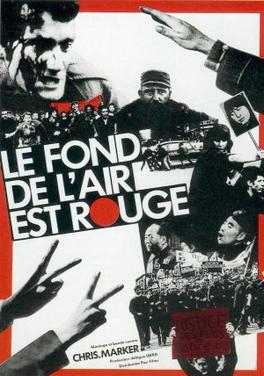
A Grin Without a Cat (Le Fond de l'air est rouge) is a 1977 documentary by French filmmaker Chris Marker, later re-released in a revised version in 1993. Spanning nearly three hours, the film is a sweeping, essay-style chronicle of the global political upheaval of the 1960s and early 1970s, focusing particularly on the rise and fragmentation of leftist revolutionary movements. Marker’s central question revolves around what became of the revolutionary hopes of 1968—why they failed, where they succeeded, and how they were absorbed or crushed by the systems they sought to challenge.
The film is structured in two parts: “Fragile Hands” and “Severed Hands.” The first half deals with revolutionary fervor, showcasing events like the Vietnam War protests, the May 1968 uprisings in France, the Prague Spring, and guerrilla movements in Latin America. The second half reflects on the internal collapse of these movements, the co-opting of their energy, and the disillusionment that followed. Marker includes footage from France, Chile, Cuba, Czechoslovakia, and more—building a mosaic of global unrest framed through a distinctly leftist lens.
Stylistically, A Grin Without a Cat blends archival footage, newsreels, interviews, and Marker’s signature poetic narration. There is no central protagonist—only the shifting energy of resistance, contradiction, and political change. Marker’s commentary is reflective rather than didactic, often asking questions instead of offering answers. The title refers to the Cheshire Cat in Alice in Wonderland, whose grin remains after the cat vanishes—a metaphor for the lingering traces of revolution even after the movements have faded.
The film had limited theatrical release but gained immense respect in intellectual and film circles. Critics praised it as a complex and deeply personal historical document. Though dense and demanding, it has been hailed as one of Marker’s most ambitious and philosophically rich works, especially in its dissection of revolutionary idealism versus political reality.
A Grin Without a Cat remains a landmark of political cinema—less a documentary in the traditional sense and more a cinematic meditation on memory, ideology, and the haunting residue of failed revolutions. It is not an answer but a reckoning.

Explore the Life Moments of
 AI Twin