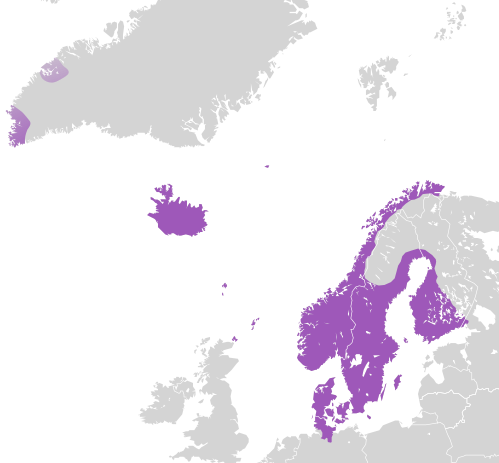
Union of Kalmar unifies Denmark, Sweden, Norway under one monarch for a period.
Denmark
Political
4 min read
Updated By: History Editorial Network (HEN)
Published:
In 1397, the Union of Kalmar was established, unifying Denmark, Sweden, and Norway under a single monarch. The union was formed through the Kalmar Union Treaty signed in the town of Kalmar, Sweden. Queen Margaret I of Denmark played a vital role in the agreement, aiming to create a strong union to counter the influence of the Hanseatic League in the region and to secure her position as ruler.
The Kalmar Union brought together the three kingdoms under one monarch but allowed them to retain their individual laws and governments. However, tensions arose due to the centralized power held by the monarch, leading to conflicts and resistance from the member states. Denmark, being the dominant power, often imposed its authority on Sweden and Norway, sparking unrest and revolts among the people.
The union's impact on the region was profound, leading to increased trade and cultural exchange between the three kingdoms. It also provided a sense of stability and security for the member states, especially in times of external threats. However, the unequal power dynamics and disputes over autonomy eventually led to the dissolution of the union in the following centuries.
The Union of Kalmar marked a significant chapter in the history of Scandinavia, showcasing attempts at political consolidation and cooperation among neighboring kingdoms. It highlighted the complexities of balancing centralized authority with the autonomy of individual states, and the challenges that arise from such endeavors.
#UnionofKalmar #Denmark #Sweden #Norway #Monarchy #PoliticalUnion #ScandinavianHistory #KalmarUnionTreaty
Explore the Life Moments of
 AI Twin