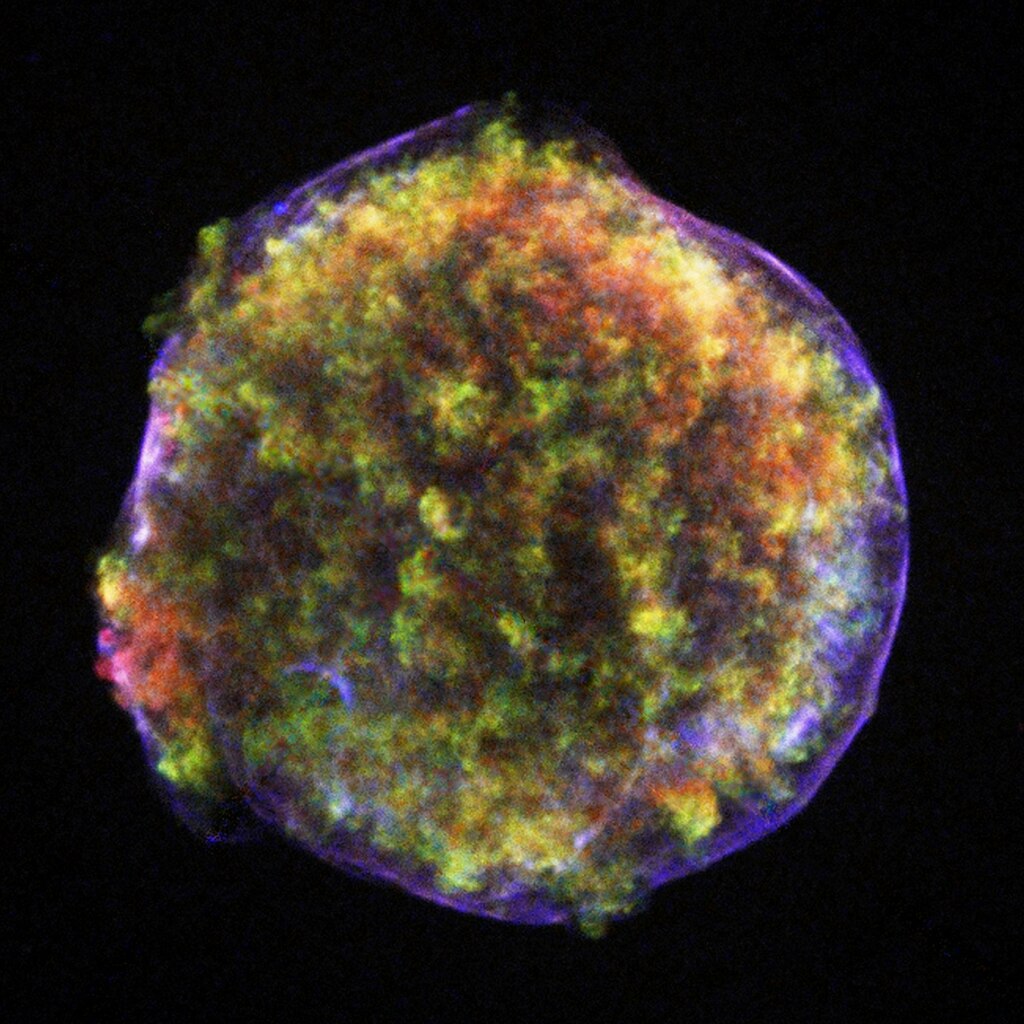
Supernova Observed in Cassiopeia
Denmark
Science
Astronomy
4 min read
Updated By: History Editorial Network (HEN)
Published:
In 1572, renowned Danish astronomer Tycho Brahe made a groundbreaking observation in the constellation of Cassiopeia. Brahe witnessed the sudden appearance of a new star, known as a supernova. This celestial event was unprecedented in recorded history and challenged the widespread belief in the immutability of the heavens.
Tycho Brahe's meticulous documentation of the supernova in Cassiopeia revolutionized the field of astronomy. His detailed observations of the new star's position and its changing brightness provided valuable insights into the nature of supernovae and the dynamic nature of the universe. This event shattered the Aristotelian idea of the heavens as a realm of perfect and unchanging celestial bodies, paving the way for the later advancements in our understanding of the universe.
The appearance of the supernova in Cassiopeia sparked a scientific revolution, leading to a fundamental shift in the way astronomers viewed the cosmos. Tycho Brahe's observation challenged existing beliefs and inspired future generations to question, observe, and analyze the mysteries of the universe.
Brahe's discovery also had a profound cultural impact. It captured the imagination of people across Europe, sparking discussions about the nature of the heavens and humanity's place in the universe. The event in Cassiopeia prompted a reevaluation of traditional cosmological views, laying the groundwork for the scientific revolution that would follow in the centuries ahead.
Tycho Brahe's observation of the supernova in Cassiopeia remains a seminal moment in the history of astronomy, symbolizing the power of observation, curiosity, and the relentless pursuit of knowledge. It stands as a testament to human ingenuity and the transformative impact of scientific discovery on our understanding of the cosmos. #TychoBrahe #Supernova #Cassiopeia #Astronomy #ScientificRevolution

Explore the Life Moments of
 AI Twin