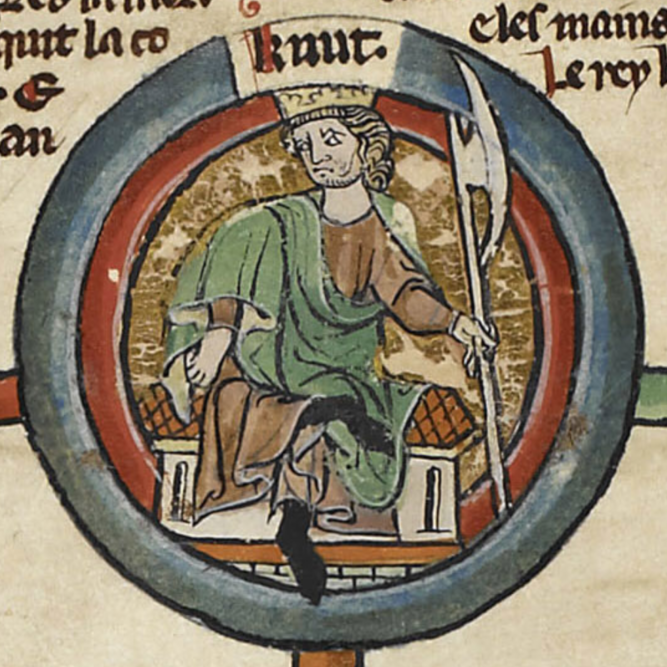
Division of Canute's empire among sons after his death
Denmark
Political
4 min read
Updated By: History Editorial Network (HEN)
Published:
Canute the Great, a prominent ruler of Denmark, passed away, precipitating the partition of his vast empire among his heirs. Canute had centralized power over a realm that included Denmark, England, Norway, and parts of Sweden. The division of his empire among his sons brought about significant changes in the political landscape of Europe.
The demise of Canute resulted in a power struggle among his descendants, with each vying for control over their designated territories. Harthacnut inherited the throne of Denmark, while Harold Harefoot rose to power in England. Meanwhile, Norway fell under the rule of Magnus the Good, another son of Canute. This fragmentation weakened the once-unified empire, leading to internal conflicts and external threats.
The division of Canute's empire marked the beginning of a period of instability and rivalries among the Nordic countries. Despite efforts to maintain unity within the family, conflicts emerged over territorial claims and ambitions for supremacy. The lack of a central authority to oversee the entire empire further fueled discord and paved the way for external powers to exploit these divisions.
The death of Canute the Great and the subsequent division of his empire had far-reaching consequences for the political dynamics in Northern Europe. The once-mighty empire was now fractured, with each successor striving to assert dominance over their respective domains. This division of power reshaped alliances, rivalries, and the balance of power in the region, setting the stage for further conflicts and realignments in the years to come.
#CanuteTheGreat #DivisionOfEmpire #NordicPolitics
Explore the Life Moments of
 AI Twin