Devastating Fire Destroys Copenhagen
Denmark
Disaster
Urban Development
4 min read
Updated By: History Editorial Network (HEN)
Published:
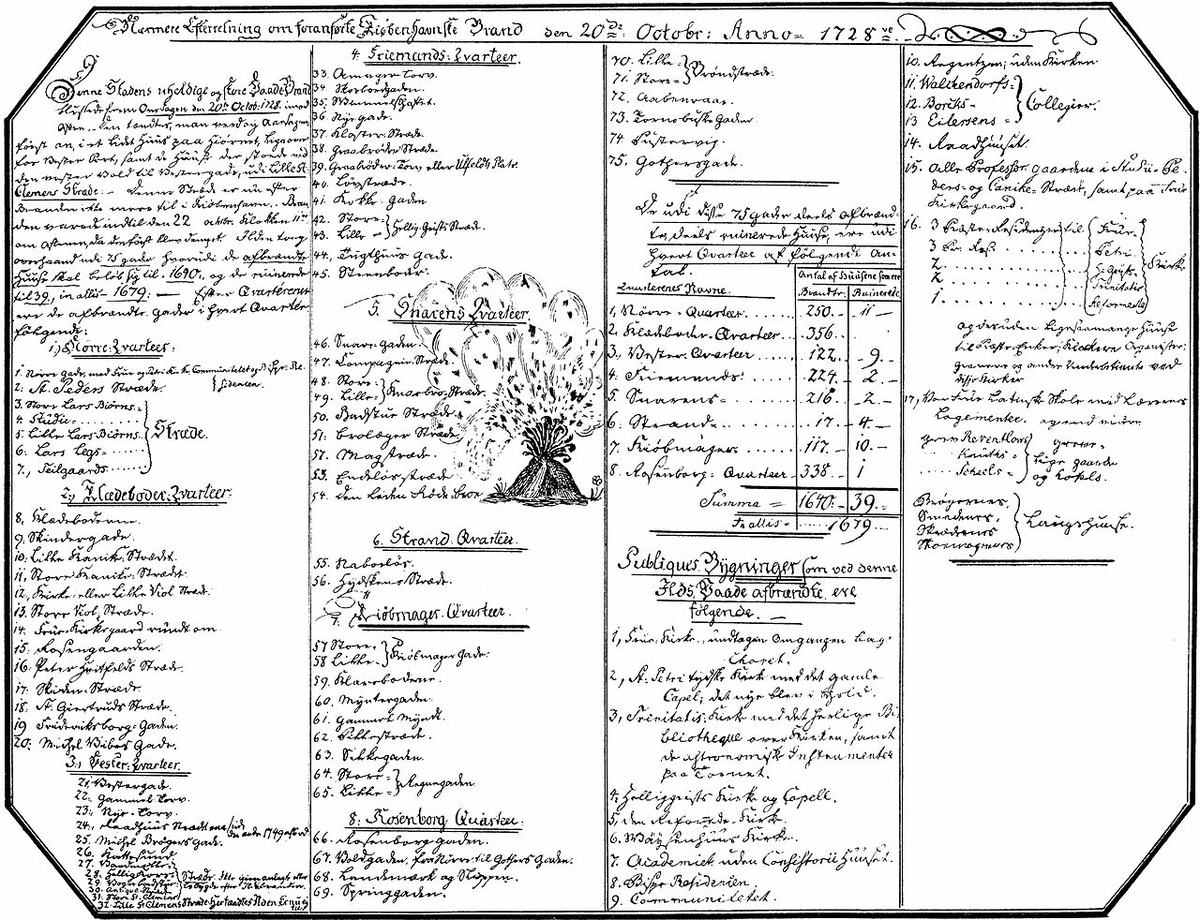
In 1728, the Great Fire of Copenhagen broke out, causing widespread destruction in the city. The fire originated in a bakery and quickly engulfed the wooden structures of the city, fueled by strong winds. The blaze spread rapidly, as the city's fire department struggled to contain the inferno due to a lack of resources and organization.
The Great Fire of Copenhagen devastated large parts of the city, destroying over one-third of its buildings, including many historical landmarks. The iconic spire of the Church of Our Lady collapsed during the fire, symbolizing the magnitude of the disaster. Thousands of residents were left homeless, and the economic impact was severe, affecting trade and commerce in the region.
In the aftermath of the fire, King Christian VI implemented new building regulations that required structures to be constructed with brick and tile roofs to prevent future disasters. The city was rebuilt with wider streets and squares, incorporating more green spaces and improved infrastructure, leading to a modernization of Copenhagen's urban landscape.
The Great Fire of Copenhagen remains a pivotal event in the city's history, showcasing the resilience and determination of its inhabitants to overcome adversity and rebuild stronger than before. The lessons learned from the disaster have shaped urban planning and architecture in Copenhagen for centuries, emphasizing the importance of safety and sustainability in city development.
#GreatFireofCopenhagen #UrbanDisaster #HistoricalRebuilding #CityResilience

Explore the Life Moments of
 AI Twin