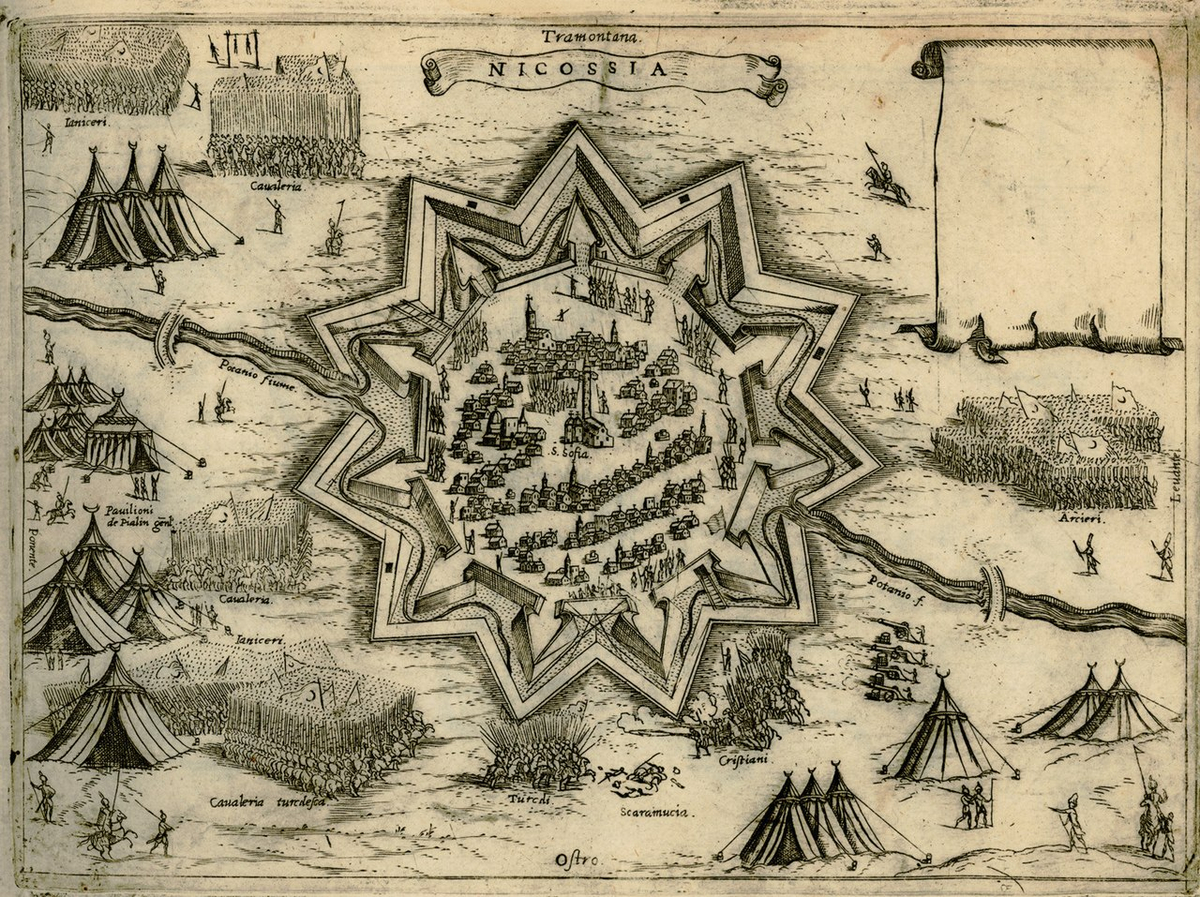
Nicosia's Fall and Massacre of 20,000 People
Cyprus
Massacre
7 min read
Updated By: History Editorial Network (HEN)
Published:
Updated:
On September 9, 1570, Nicosia, the capital of Cyprus, fell to Ottoman forces after a brutal siege, marking a pivotal moment in the island’s history. The conquest of Nicosia was part of the larger Ottoman-Venetian War (1570–1573), a conflict driven by the Ottoman Empire's expansionist ambitions and the strategic importance of Cyprus, which was then under Venetian control. The fall of Nicosia not only led to the slaughter of thousands but also heralded the beginning of Ottoman rule over Cyprus, which would last for more than three centuries.
The Ottoman Empire, led by Sultan Selim II, had long eyed Cyprus due to its central position in the Eastern Mediterranean, a valuable point of control for both military and trade routes. In 1570, the Ottomans launched a large-scale invasion of the island, with an estimated force of 60,000 soldiers. Nicosia, being the capital and largest city of Cyprus, was the primary target for the invaders.
The Venetians, who had controlled Cyprus since 1489, were aware of the threat and had attempted to fortify Nicosia in preparation for the Ottoman assault. However, despite efforts to strengthen its defenses, Nicosia's fortifications were not sufficient to withstand the sheer scale and determination of the Ottoman army. The Venetian garrison was heavily outnumbered, and after a 45-day siege, the city’s walls were breached on September 9, 1570.
What followed the city's fall was one of the bloodiest episodes in Cypriot history. As the Ottoman forces poured into Nicosia, they unleashed widespread destruction. Approximately 20,000 inhabitants of the city were killed in the ensuing massacre, including both soldiers and civilians. The survivors faced a grim fate, as many were enslaved and shipped off to various parts of the Ottoman Empire. Churches, homes, and public buildings were looted and destroyed, and the city was left in ruins. This brutal conquest sent shockwaves across Europe, as the scale of the massacre was unprecedented in the region at that time.
The fall of Nicosia marked a decisive moment in the Ottoman conquest of Cyprus. With the capital in their hands, the Ottomans quickly moved to capture other key cities, including Famagusta, which fell the following year in 1571 after another prolonged siege. With Famagusta’s fall, Cyprus was fully under Ottoman control, bringing an end to Venetian rule on the island.
The conquest of Cyprus and the fall of Nicosia had long-lasting effects on the island's demographics, culture, and political structure. The Ottoman Empire introduced new administrative systems and laws, and a significant number of Muslim settlers were brought to the island, altering its cultural and religious landscape. Nicosia, although devastated, would eventually recover and become the administrative center of Ottoman Cyprus.
For centuries to come, the fall of Nicosia would be remembered as a turning point in Cypriot history, symbolizing the end of Venetian rule and the beginning of a long period of Ottoman domination. The massacre of 20,000 Nicosians and the enslavement of many more remains one of the darkest episodes in the island’s past, a moment that forever changed the trajectory of Cyprus.
#FallOfNicosia #OttomanConquest #CypriotHistory #OttomanEmpire #VenetianCyprus #NicosiaSiege #MomentsOfLife #MoofLife_Moment #MoofLife
Primary Reference
Cyprus - OTTOMAN RULE
Explore the Life Moments of
 AI Twin