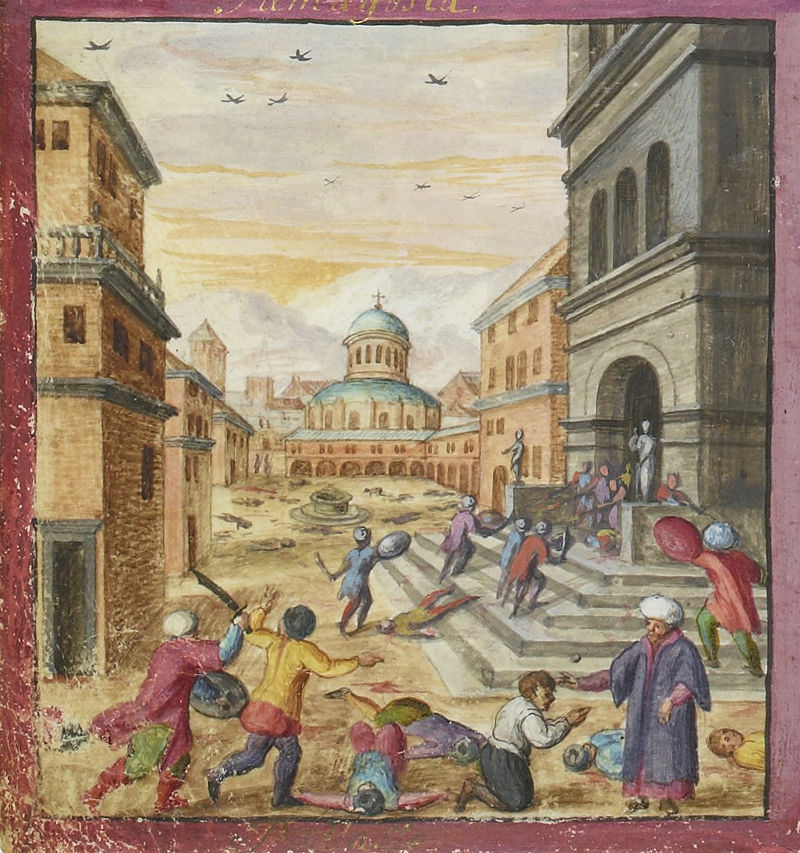
Fall of Famagusta and Execution of Bragadin
Cyprus
Political
4 min read
Updated By: History Editorial Network (HEN)
Published:
Updated:
Famagusta, a prosperous port city on the eastern coast of Cyprus, had long been under Venetian control. It served as a strategic and commercial hub in the eastern Mediterranean. However, the Ottoman Empire, in its campaign to extend dominion across the region, mounted a siege on Famagusta. After months of heavy bombardment and diminishing supplies, the defending Venetian forces, led by Marco Antonio Bragadin, could no longer withstand the sieging forces.
The Venetian defenders were significantly outnumbered. Ottoman forces, commanded by Lala Mustafa Pasha, laid siege with a force estimated to be between 100,000 to 200,000 strong, compared to the 8,500 Venetian soldiers and local inhabitants defending the city. The extended resistance of the Venetians led to extreme conditions inside Famagusta, with famine and disease taking a toll.
Eventually, the Venetians capitulated. Initial terms of surrender ostensibly promised safe passage for the defenders and respectful treatment. However, the surrender terms were violated. Instead of safe conduct, many inhabitants and the Venetian soldiers were massacred. Marco Antonio Bragadin suffered a particularly gruesome fate. He was skinned alive, his body mutilated and displayed as a warning to others who might resist Ottoman advances.
The fall of Famagusta significantly impacted the balance of power in the Eastern Mediterranean. It marked the end of Venetian rule in Cyprus, leading to the establishment of Ottoman dominance, which would last for ove
Primary Reference
Ottoman–Venetian War (1570–1573) - Wikipedia
Explore the Life Moments of
 AI Twin