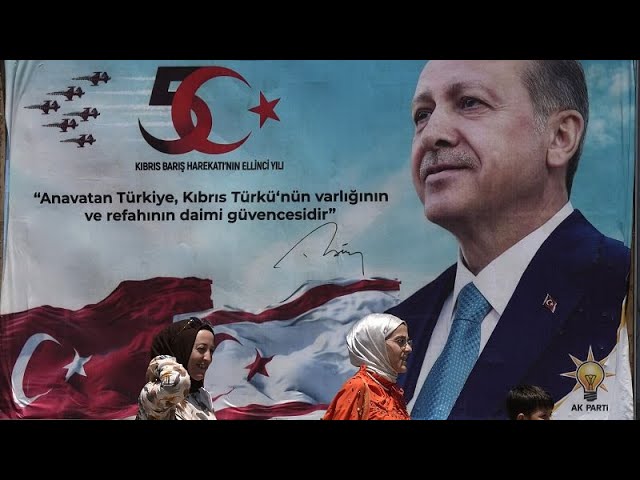
Erdoğan Supports Two-State Solution for Cyprus
Cyprus
Political
Global Trade
5 min read
Updated By: History Editorial Network (HEN)
Published:
Updated:
Turkish President Recep Tayyip Erdoğan formally dismissed a United Nations-backed proposal for a federal solution to the Cyprus issue, instead advocating a two-state solution. This stance was immediately rejected by Greek Cypriots. The UN's federated approach had aimed to create a bi-zonal and bi-communal federation to reunify the divided island. However, Erdoğan's declaration underscored his support for recognizing the Turkish Republic of Northern Cyprus (TRNC) as a separate, sovereign state.
Cyprus has been partitioned since 1974, following a Greek Cypriot coup d'état and subsequent Turkish military intervention. The island is presently divided between the Republic of Cyprus in the south, predominantly inhabited by Greek Cypriots, and the TRNC in the north, recognized only by Turkey.
The UN plan had been seen as a pathway towards peace, aiming to address the political, security, and economic disparities between the two communities. Numerous rounds of UN-mediated talks had been conducted over the decades, yielding limited success. According to various polls, the federal solution had a mixed reception among Cypriots; some saw it as the best chance for lasting peace, while others viewed it with skepticism, fearing dilution of their respective identities.
Erdoğan’s outright rejection of the federal model and call for a two-state solution represents a significant geopolitical pivot. This proposal aligns with Turkey's strategic interests in the Mediterranean and its geopolitical contestations, including energy exploration matters. The Greek Cypriot leadership vehemently opposed Erdoğan's two-state vision, arguing it cements the island's division and undermines prospects for comprehensive peace.
This divergence further complicates the already volatile Eastern Mediterranean dynamics, involving not only Cyprus and Turkey but also Greece, the European Union, and other international actors. Increased tensions could potentially affect regional stability and economic investments, especially in hydrocarbon exploration.
As the international community examines the shifting landscape, the latest developments mark a critical juncture in the long-standing Cyprus conflict, underscoring the pervasive complexity of achieving a mutually agreeable resolution.
#CyprusConflict #TwoStateSolution #UnitedNations #Turkey #Greece #Geopolitics #EnergyExploration #MediterraneanTensions #MoofLife
Explore the Life Moments of
 AI Twin