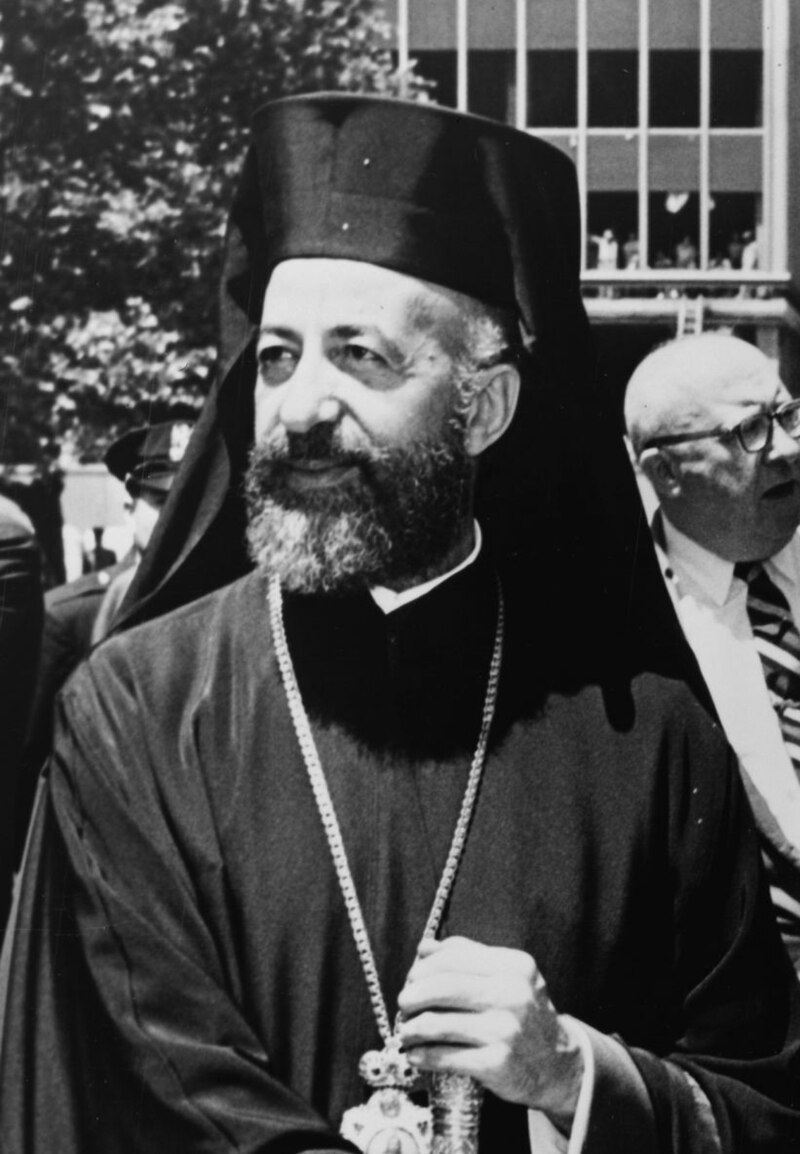
Archbishop Makarios Elected First President After Independence under Complex Constitution
Cyprus

Political
Global Trade
5 min read
Updated By: History Editorial Network (HEN)
Published:
Updated:
In the mid-20th century, Cyprus, a strategically located island in the Eastern Mediterranean, moved towards sovereignty following years of political turmoil and colonial rule. The struggle for independence was marked by complex inter-ethnic dynamics, primarily between the Greek Cypriot majority and the Turkish Cypriot minority, alongside the overarching influence of the British colonial administration.
The culmination of these tensions and negotiations led to the establishment of a sovereign state under a nuanced and detailed constitution designed to address the multifaceted fabric of Cypriot society. The agreement stipulated that Cyprus would be an independent republic with a power-sharing system in place to represent both Greek and Turkish Cypriots. The intricate constitution included provisions for a bi-communal political structure, with specified quotas and roles for members of both communities within the government's framework.
Archbishop Makarios III, a significant figure in the Greek Cypriot independence movement and a proponent of Enosis (union with Greece), was elected as the first President of the Republic of Cyprus. His tenure marked the beginning of a new political era for the island, aiming to navigate the delicate balance of inter-ethnic coexistence and external geopolitical interests.
The formation of independent Cyprus under Archbishop Makarios' leadership had immediate and long-term implications. Domestically, it aimed to foster unity and stability, though latent inter-communal tensions persisted. Internationally, Cyprus's sovereignty altered the strategic dynamics of the Eastern Mediterranean, impacting British colonial holdings and influencing the broader geopolitical landscape during the Cold War era.
Statistics following independence showed diverse economic developments, with the island resorting to agriculture, tourism, and later, finance and services as pillars of its economy. The political landscape remained contentious, with various incidents straining the intended harmony laid out by the constitution.
The independence of Cyprus and the ascendancy of Archbishop Makarios as its first president symbolize both a historical resolution and the onset of new challenges in governance, identity, and international relations.
#CyprusIndependence #ArchbishopMakarios #BiCommunalGovernance #PoliticalHistory #MoofLife
Primary Reference
Cyprus (Historical Overview) / Republic of Türkiye Ministry of ...
Explore the Life Moments of
 AI Twin