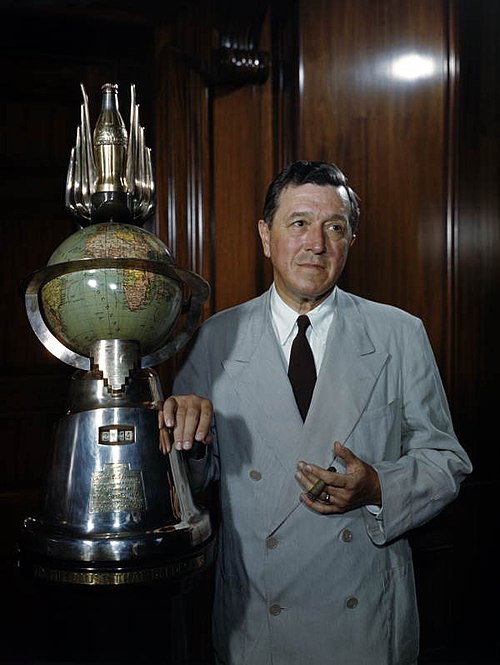
Robert W. Woodruff Becomes President
United States
Business
Corporate Leadership
Beverage Industry
7 min read
Updated By: History Editorial Network (HEN)
Published:
Updated:
On 28/04/1923, The Coca-Cola Company board of directors elected Robert W. Woodruff as president of the company. At only 33 years old, Woodruff assumed leadership during a difficult period in Coca-Cola’s history, as the company faced substantial debt obligations and ongoing legal and financial pressures following a major ownership transition earlier in the decade.
The path to Woodruff’s presidency began in 1919 when an investor group led by his father, Ernest Woodruff, purchased Coca-Cola from founder Asa G. Candler for approximately $25 million. The acquisition was one of the largest corporate transactions in the American South at the time. The syndicate financed the purchase largely through borrowed capital, placing significant financial pressure on the company in the years that followed. In addition to debt concerns, Coca-Cola also faced legal disputes and regulatory scrutiny related to trademark protection, bottling rights, and product ingredients during the early 1920s.
Robert Woodruff entered the presidency with experience in sales and business operations, though his appointment at a relatively young age attracted attention within the corporate world. After taking office, he focused heavily on operational expansion, marketing consistency, bottling system growth, and international development. Woodruff believed that Coca-Cola should be widely available in as many locations and situations as possible, a philosophy that later shaped the company’s global expansion strategy.
Under Woodruff’s leadership, Coca-Cola experienced dramatic long-term growth over the following decades. He strengthened relationships with independent bottlers, expanded advertising campaigns, improved product distribution, and helped transform Coca-Cola into an internationally recognized consumer brand. During his tenure, the company also expanded internationally through wartime bottling operations during World War II and established long-term global partnerships in sports and entertainment marketing.
Woodruff became especially known for his emphasis on product accessibility and brand visibility. His leadership philosophy encouraged Coca-Cola to become integrated into everyday life through restaurants, vending machines, retail outlets, and eventually international markets around the world. He also oversaw innovations in packaging, distribution, and corporate organization that strengthened Coca-Cola’s competitive position throughout the twentieth century.
Although Woodruff later stepped down as president in 1954, he remained deeply influential within the company for decades as chairman and senior executive leader. His tenure is widely regarded as one of the most transformative periods in Coca-Cola’s corporate history.
Historical Significance
Robert Woodruff’s election as president marked the beginning of an era that reshaped Coca-Cola into a global consumer powerhouse. His leadership during periods of financial uncertainty and rapid expansion established many of the business strategies, marketing principles, and international growth policies that defined Coca-Cola throughout the twentieth century.
Robert W. Woodruff
#mooflife
#MomentOfLife
#Coca-cola
#RobertW.Woodruff
#BeverageIndustry
#MarketingStrategy
#CorporateResponsibility
Primary Reference
Coca Cola : Forefather Robert Woodruff's Enduring Legacy

Explore the Life Moments of
 AI Twin