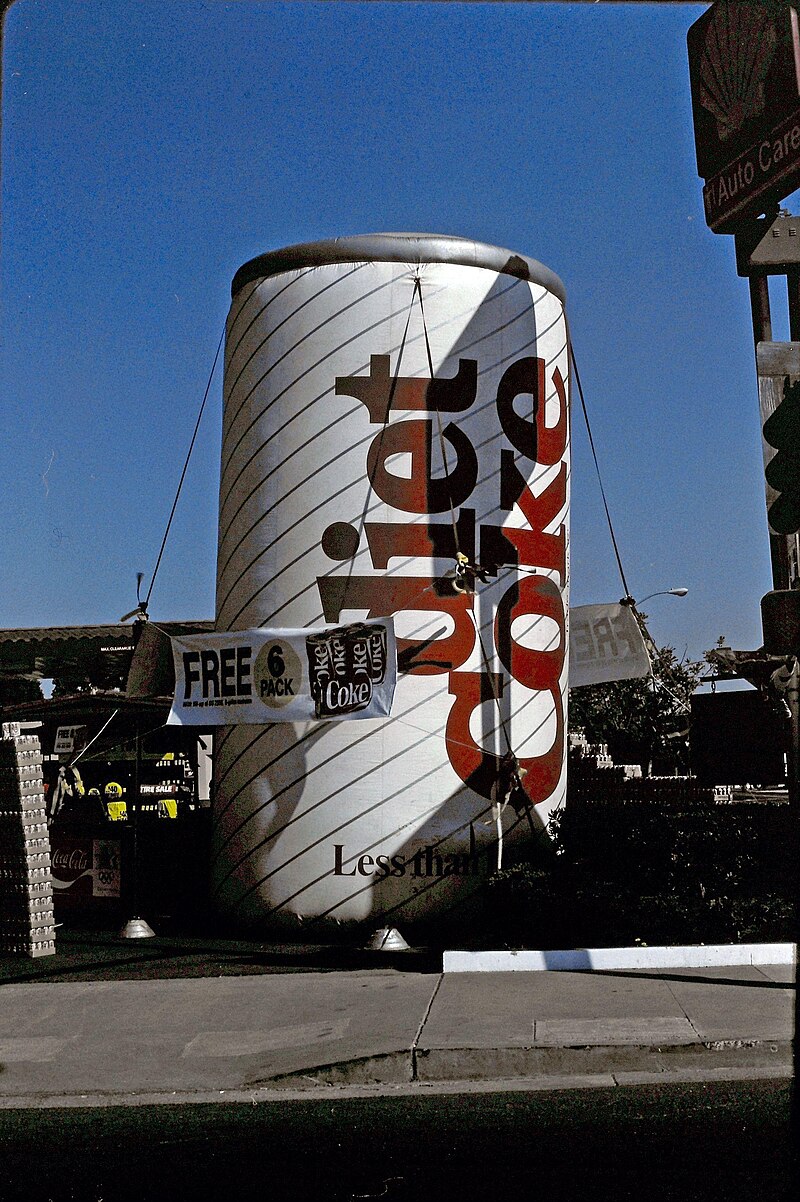
Launch of Diet Coke, which quickly becomes the top sugar-free soda in the U.S.
United States
Business
7 min read
Updated By: History Editorial Network (HEN)
Published:
Updated:
In 1982, The Coca-Cola Company officially launched Diet Coke, introducing the first entirely new product to carry the Coca-Cola trademark rather than being marketed as a direct variation of the original formula. The launch represented a major shift in the company’s product strategy and reflected growing consumer demand for low-calorie soft drinks during the late twentieth century.
Unlike the original Coca-Cola beverage, Diet Coke used a distinct flavor profile and contained no sugar. The product was developed to compete more aggressively within the expanding diet soft drink market, where consumer interest in calorie reduction and sugar-free beverages had increased significantly during the late 1970s and early 1980s. Coca-Cola executives viewed the launch as an opportunity to attract consumers seeking lighter beverage options while still benefiting from the global recognition associated with the Coca-Cola name.
The introduction proved commercially successful almost immediately. Diet Coke rapidly gained market share in the United States and internationally, eventually becoming one of the world’s best-selling diet soft drinks. The beverage also helped Coca-Cola strengthen its competitive position against rival products from PepsiCo
and other beverage manufacturers entering the diet soda category during the same period.
Throughout the 1980s and 1990s, the corporate histories of Coca-Cola and Diet Coke became increasingly interconnected as the company expanded its portfolio to address changing health trends, calorie awareness, and shifting consumer demographics. Major company milestones during this period affected both product lines, including the 1985 “New Coke” controversy, the return of “Coca-Cola Classic,” and later the introduction of Coca-Cola Zero in 2005. Global advertising campaigns also frequently promoted both traditional Coca-Cola and its low-calorie alternatives together as part of a broader brand strategy.
Diet Coke gradually developed its own distinct identity within Coca-Cola’s product lineup. The brand became known for separate advertising campaigns, celebrity endorsements, fashion oriented marketing, and packaging designs that targeted consumers differently from traditional Coca-Cola advertising. Despite this independent branding approach, Diet Coke remained closely associated with the broader Coca-Cola family and became central to the company’s long term international growth strategy.
The evolution of Diet Coke demonstrated how Coca-Cola adapted to changing global consumer behavior while maintaining the strength of its flagship trademark. Over time, the beverage became one of the company’s most commercially important products and helped establish low-calorie soft drinks as a permanent category within the global beverage industry.
Why This Moment Matters
The success of Diet Coke showed that Coca-Cola could expand beyond its original formula while preserving the strength of its core brand identity. The product’s rapid rise also reflected broader shifts in consumer attitudes toward health, calories, and beverage choice during the late twentieth century.
# DietCoke
#sugar-free
#Coca-Cola
#Newproduct
Primary Reference
The Coca-Cola Company

Explore the Life Moments of
 AI Twin