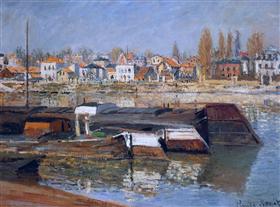
Monet's 'La Seine à Asnières' Seized by Nazis: Theft of Cultural Heritage.
France
Art
WWII
4 min read
Updated By: History Editorial Network (HEN)
Published:
Updated:
Claude Monet's famous painting 'La Seine à Asnières' ('Les Péniches sur la Seine'), was owned by Mrs. Fernand Halphen. During the German occupation of France, this piece of artwork was seized by agents of the German Embassy in Paris. This event was a part of a more extensive campaign during which numerous art pieces and cultural artifacts were confiscated by Nazi forces. The goal was to amass European cultural treasures, particularly those owned by Jewish families or perceived Holocaust victims.
Monet, a leading figure in the Impressionist movement, had crafted the painting to exude the serenity and vibrancy of the Seine River at Asnières through innovative uses of light and color. His work was highly regarded not only in France but throughout the world. The seizure of 'La Seine à Asnières' stripped Mrs. Halphen of a significant part of French cultural heritage and a personal treasure. This action reflected a broader, systematized effort by the Nazi regime to appropriate valuable art.
The painting's confiscation was one among many instances where significant works of art were subject to theft and clandestine redistribution. These acts were conducted with the intention of cultural obliteration and financial exploitation, impacting the art world and communities deeply. Thousands of artworks disappeared during this period, many of which are still unaccounted for.
This targeted seizure illustrates the exploitation of cultural assets as a form of wartime aggression and serves as a reminder of the extensive loss experienced during the conflicts of that era. The legacy of these actions continues to affect art restitution efforts and cultural heritage repatriation programs.
#MoofLife #CulturalHeritage #ArtConfiscation #Monet #HolocaustArtThefts #RestitutionIssues
Primary Reference
Untitled
Explore the Life Moments of
 AI Twin