Claude Monet's Visionary Evolution: Adapting to Challenges, Inspiring Innovation in Art
France
Art
Innovation
4 min read
Updated By: History Editorial Network (HEN)
Published:
Updated:
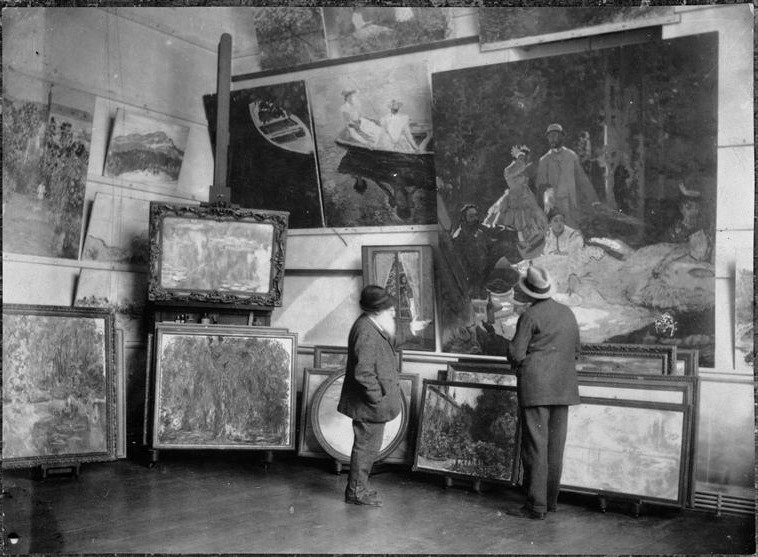
During his later years, Claude Monet, the French painter, faced significant challenges due to his deteriorating eyesight. Monet had been developing cataracts, which impaired his vision and influenced his painting style. To adapt to his failing eyesight, Monet began working on larger canvases. This adjustment not only accommodated his vision difficulties but also led to a notable shift in his artistic approach.
Monet's later works were characterized by bolder and more abstract compositions. With larger canvases, he could use wider brushstrokes and more expressive techniques, allowing for a freer interpretation of his subjects. This period gave rise to some of his most famous water lily paintings, which demonstrated a move away from detailed representation toward more abstract forms. The use of vibrant colors and diffused light in these works reflected Monet's changing perception of his surroundings and contributed to the evolution of modern art.
The adaptation to larger canvases and the resultant stylistic changes had a profound impact on the art world. Monet's willingness to embrace change and continue creating despite his physical limitations inspired many contemporary and future artists. His work during this period is often celebrated for its innovation and is seen as a precursor to abstract expressionism.
Monet's exploration of new techniques and forms under challenging circumstances underscores the resilience and creativity that define his legacy. His later compositions continue to be studied and admired for their bold abstraction and emotional depth, cementing his status as a pivotal figure in art history.
#Monet #ArtAdaptation #ModernArt #AbstractComposition #ArtHistory #MoofLife
Explore the Life Moments of
 AI Twin