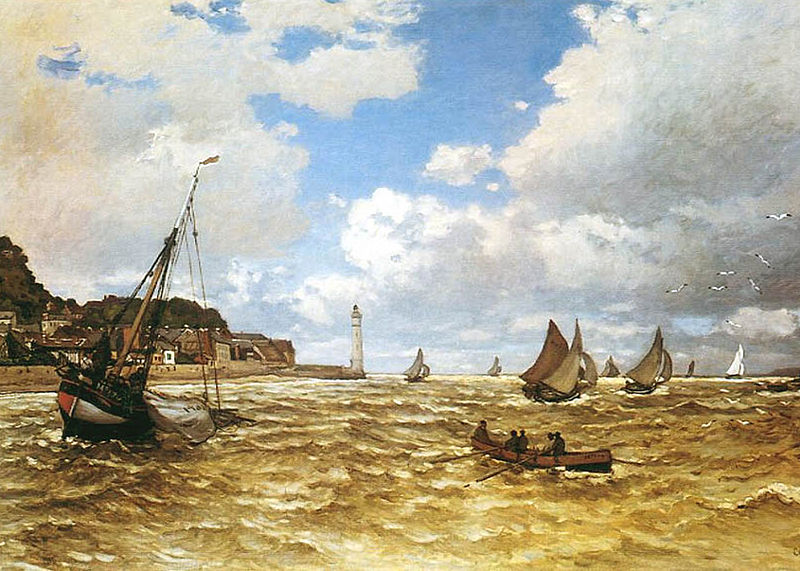
Claude Monet's Salon Debut: Pioneering Impressionism with Light and Atmosphere.
France
ArtFrenchArt
Impressionism
ArtCriticism
SalonDebut
3 min read
Updated By: History Editorial Network (HEN)
Published:
Updated:
Claude Monet, an emerging artist, participated in the Salon with his pieces La Pointe de la Hève at Low Tide and Mouth of the Seine at Honfleur. His submissions garnered substantial attention and praise from critics and peers. Monet's work stood out due to his unique approach and perception of natural light, setting him apart from traditional artists of the time.
La Pointe de la Hève at Low Tide portrays a serene coastal scene, skillfully capturing the interplay between land and sea. Mouth of the Seine at Honfleur depicts a bustling port with a dynamic use of color and light. These works contributed to a shift in the art community, gradually paving the way for what would later be known as Impressionism.
Monet's recognition at the Salon marked a pivotal moment in his career. It showcased his talent to a broader audience and solidified his position in the art world. His innovative techniques, particularly his use of light and atmosphere, began influencing other artists and reshaping contemporary artistic practices.
The Salon played a crucial role in promoting new artistic trends and providing a platform for artists like Monet. The praise he received helped him gain both visibility and credibility, essential for his future endeavors. Monet's success at the Salon is often regarded as one of the early indicators of the changing landscape of art during this period.
#ClaudeMonet #ArtHistory #FrenchArt #Impressionism #ArtCriticism #SalonDebut #MoofLife
Primary Reference
La Pointe de la Hève at Low Tide | Kimbell Art Museum
Explore the Life Moments of
 AI Twin