Treaty of Tientsin ignites Second Opium War
China

war
3 min read
Updated By: History Editorial Network (HEN)
Published:
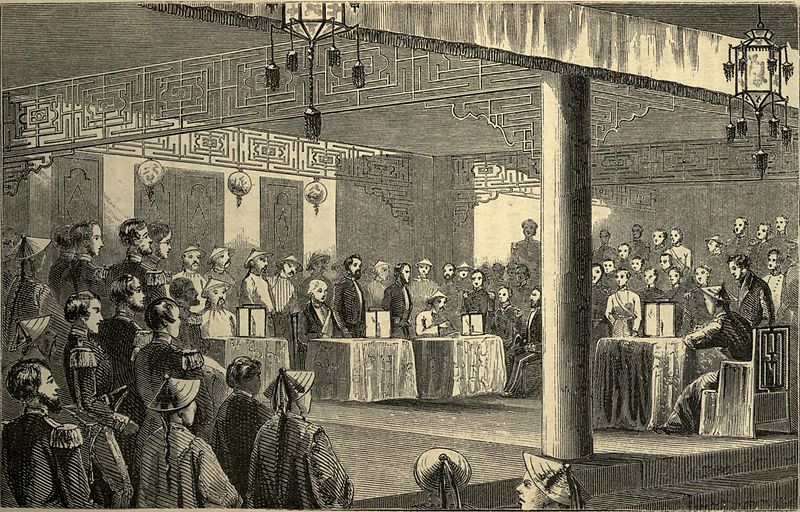
During the signing of the Treaty of Tientsin, China, faced with military pressure from the Western powers, including Britain and France, agreed to allow increased trade and diplomatic presence in the country. This agreement followed tensions stemming from the First Opium War, and the British desire to further open Chinese markets for trade. The treaty also addressed issues such as the legalization of opium trade, extraterritoriality for foreigners in China, and the cession of territories to the Western powers.
The signing of the Treaty of Tientsin marked the beginning of the Second Opium War, a conflict that further exposed China's vulnerabilities against Western military prowess. The war resulted in significant losses for China, including further territorial concessions, increased indemnities, and the opening of more ports for foreign trade. The treaty and the war that followed had far-reaching consequences, accelerating the decline of the Qing dynasty and further weakening China's sovereignty.
The Treaty of Tientsin and the Second Opium War symbolize China's struggle against foreign interference and imperialism, highlighting the unequal power dynamics between China and the Western powers during that period. They are also significant in understanding China's modern history and its efforts to reclaim its national sovereignty. #TreatyofTientsin #SecondOpiumWar #ChinaWesternRelations
Explore the Life Moments of
 AI Twin