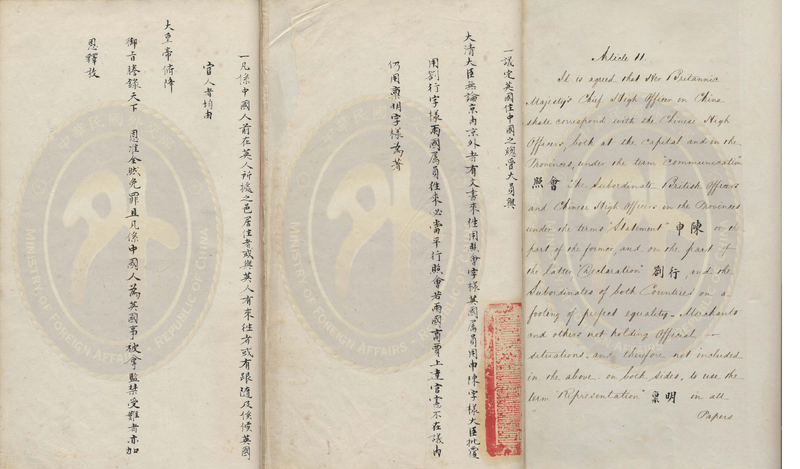
Treaty of Nanking Ends Opium War
China

Political
3 min read
Updated By: History Editorial Network (HEN)
Published:
As tensions escalated between China and Britain due to issues related to trade and the opium trade, the Opium War eventually broke out. The conflict led to the Treaty of Nanking being signed, marking the end of the war. The treaty was signed in Nanking, China, aimed at resolving the disputes between the two nations. As per the terms, China agreed to pay a large indemnity to Britain, open up several ports for trade, and cede Hong Kong to British control. This event significantly weakened China's sovereignty and had long-lasting repercussions on the nation's economy and political landscape.
The Treaty of Nanking paved the way for a series of unequal treaties that China was forced to sign with various Western powers, ultimately leading to the concept of extraterritoriality in China. The treaty also highlighted the unequal power dynamics between China and Western nations during the 19th century. It became a symbol of China's humiliation and sparked a period of introspection and reform in the country.
#TreatyofNanking #OpiumWar #ChinaBritainRelations #UnequalTreaties #Extraterritoriality #HongKongcession
Explore the Life Moments of
 AI Twin