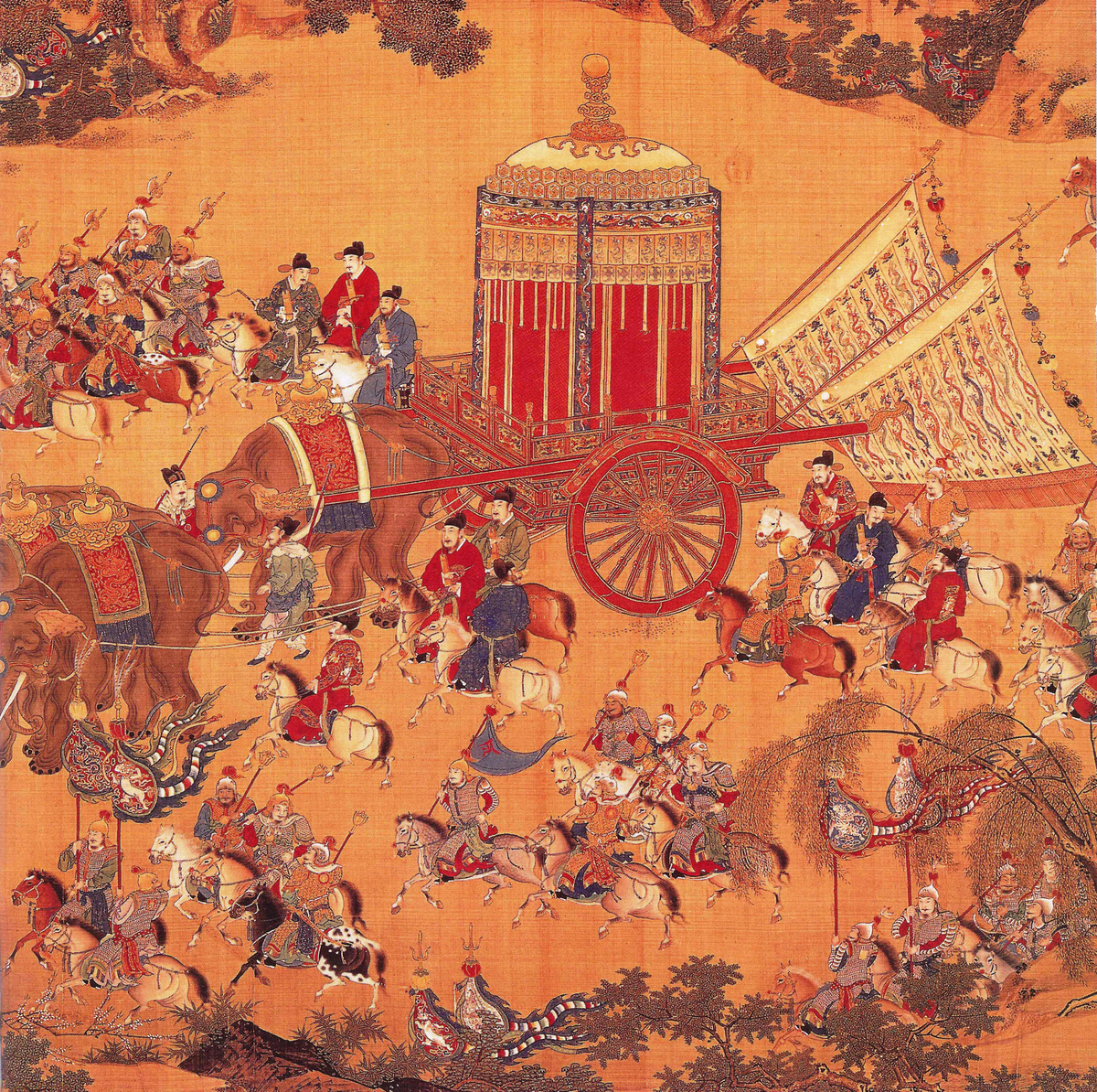
Rise of the Ming Dynasty in China
China

- \n- Cultural
3 min read
Updated By: History Editorial Network (HEN)
Published:
The establishment of the Ming Dynasty marked the end of the Mongol-led Yuan Dynasty's rule in China. Zhu Yuanzhang, a former Buddhist monk and rebel leader, led a successful rebellion against the Mongols, eventually becoming the founding emperor of the Ming Dynasty. The Ming Dynasty brought stability, prosperity, and cultural flourishing to China.
Under Ming rule, the capital was moved to Nanjing and later to Beijing, where the construction of the iconic Forbidden City began. The Ming Dynasty is well-known for its maritime expeditions led by Zheng He, which expanded Chinese influence in the Indian Ocean region. The dynasty also saw the completion of the Great Wall of China and the development of the civil service examination system.
The Ming Dynasty brought about a restoration of traditional Chinese culture and Confucian values. The arts, literature, and philosophy flourished during this period, with the revival of classical Chinese texts and the establishment of the Imperial Academy. The Ming Dynasty also saw advancements in agriculture, technology, and trade.
The establishment of the Ming Dynasty was a transformative period in Chinese history, shaping the country's culture, politics, and society for centuries to come. #MingDynasty #ChineseHistory #CulturalFlourishing

Explore the Life Moments of
 AI Twin