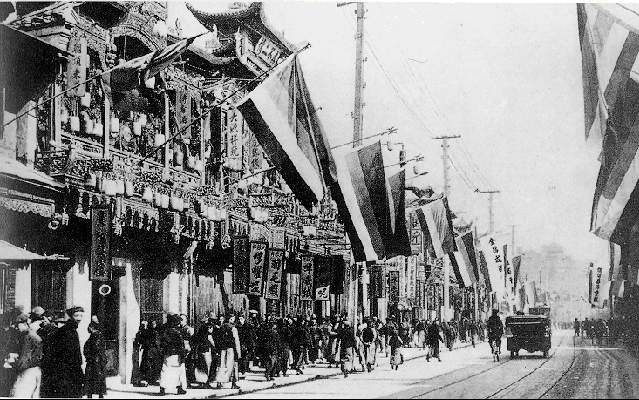
Revolution leads to Republic establishment
China

Political
Chinese
3 min read
Updated By: History Editorial Network (HEN)
Published:
The Xinhai Revolution saw the end of the Qing dynasty, which had ruled China for over two centuries. The revolution was fueled by a combination of factors, including widespread corruption, dissatisfaction with imperial rule, and the influence of Western ideas. Sun Yat-sen, a revolutionary leader, played a crucial role in organizing resistance against the Qing dynasty.
The impact of the Xinhai Revolution was profound. It led to the establishment of the Republic of China, marking the end of the imperial system in China. The revolution also paved the way for a series of political reforms aimed at modernizing the country and promoting democracy.
Following the establishment of the Republic of China, Sun Yat-sen became the provisional president. Despite facing internal strife and external pressures, the new government embarked on a series of ambitious reforms, including the promulgation of a republican constitution and the abolition of feudal privileges.
The Xinhai Revolution was a turning point in Chinese history, signaling the end of traditional imperial rule and the beginning of a new era of political change and modernization. It laid the foundation for the establishment of a more democratic system of governance in China.
#XinhaiRevolution #QingDynasty #RepublicOfChina #SunYatSen #PoliticalReform #Modernization #ChineseHistory

Explore the Life Moments of
 AI Twin