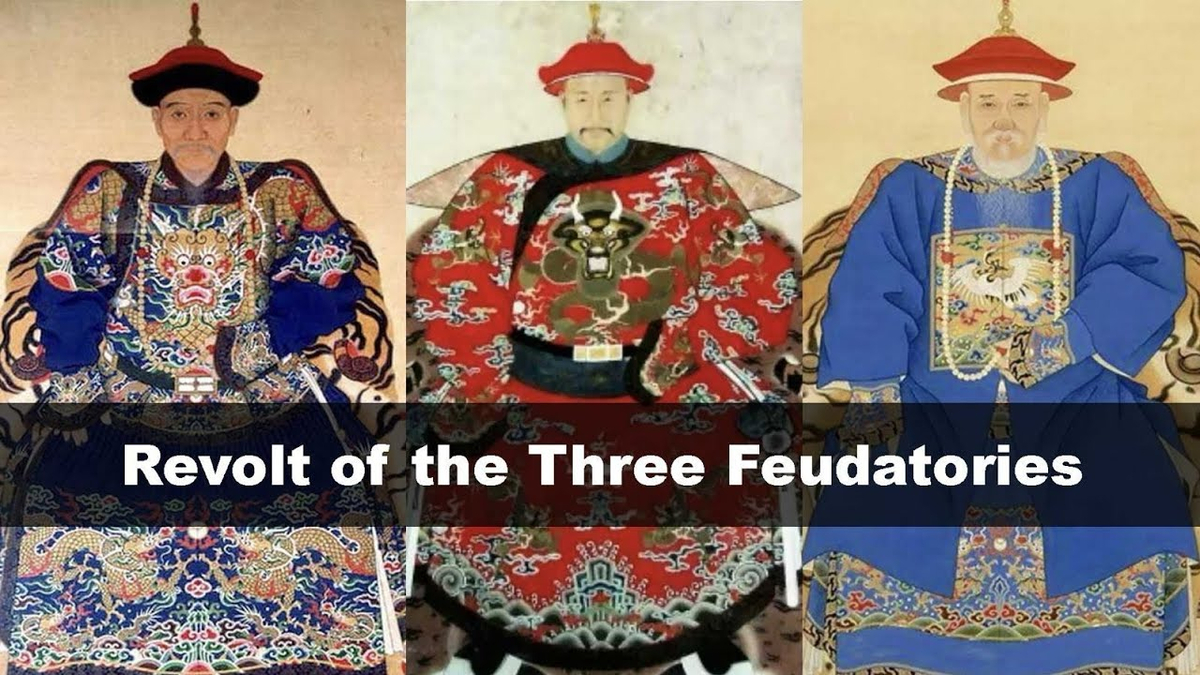
Revolt of Three Feudatories Against Qing Dynasty
China

Political
3 min read
Updated By: History Editorial Network (HEN)
Published:
The Revolt of the Three Feudatories was a rebellion in Qing Dynasty China. It was triggered by discontent among three prominent generals who felt marginalized by the central government. They revolted against the Emperor's authority, aiming to establish their own independent states in southern China.
Led by Wu Sangui, Shang Kexi, and Geng Jimao, the rebellion grew in scale and posed a significant threat to the Qing Dynasty. The rebels were able to gain control of vast territories and mobilize a formidable army against the imperial forces.
The conflict lasted for years, resulting in widespread devastation and loss of life. The Qing Dynasty was forced to divert significant resources to quell the rebellion, causing a strain on the imperial treasury and military.
Ultimately, the rebellion was suppressed by the Qing forces, and the three feudatories were defeated. The Emperor implemented policies to strengthen central control over the provinces and prevent similar uprisings in the future.
The Revolt of the Three Feudatories highlighted the challenges of governing a vast empire and maintaining unity among regional power holders. It also demonstrated the Qing Dynasty's ability to overcome internal threats and preserve its authority.
#QingDynasty #Rebellion #ChinaHistory

Explore the Life Moments of
 AI Twin