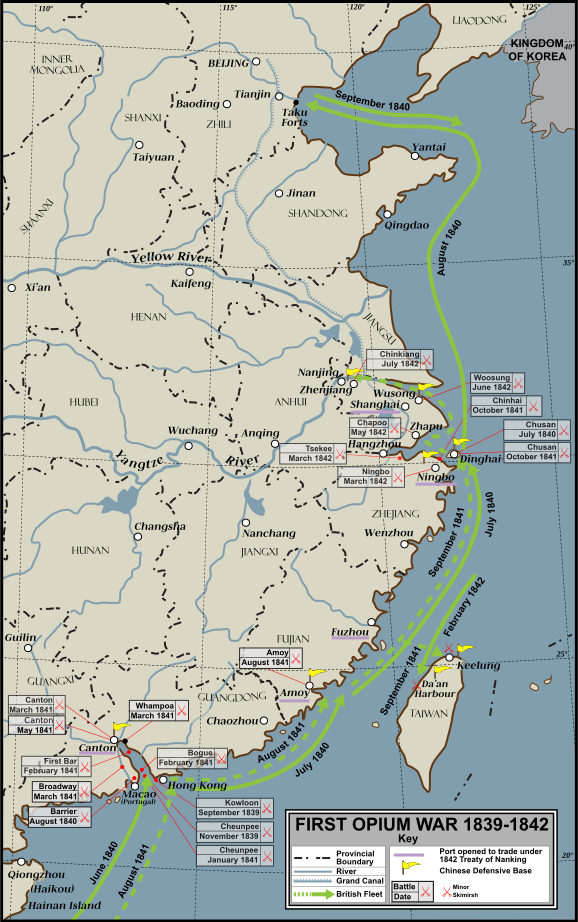
Opium War: Conflict Begins with Britain
China

Political
Global Trade
3 min read
Updated By: History Editorial Network (HEN)
Published:
Updated:
In the 1830s, tensions rose between China and Great Britain over trade disparities. Britain sought to address the trade imbalance by supplying opium to China, leading to widespread addiction among the Chinese population. In retaliation, the Chinese Emperor ordered the confiscation and destruction of British opium, sparking the start of the Opium War.
The conflict marked a turning point in Chinese history as it exposed the weaknesses of the Qing Dynasty and their inability to resist Western powers. Despite initial Chinese resistance, Britain's superior military technology and naval power ultimately led to their victory in the war. The Treaty of Nanking, signed in 1842, ended the hostilities and forced China to cede Hong Kong to Britain, open additional ports for trade, and pay a significant indemnity.
The Opium War had far-reaching consequences for China, including the further erosion of Chinese sovereignty, the imposition of unequal treaties with Western powers, and the weakening of the traditional Confucian social order. It highlighted the need for modernization and reform within China to prevent further exploitation by foreign powers.
#OpiumWar #ChinaBritainConflict #TreatyofNanking
Primary Reference
First Opium War
Explore the Life Moments of
 AI Twin