Hong Kong's handover from British rule to China
China
10 min read
Updated By: History Editorial Network (HEN)
Published:
On July 1, 1997, Hong Kong was handed over from British rule to China, marking the end of 156 years of British colonial governance and the beginning of a new era under Chinese sovereignty. This historic event was the result of prolonged negotiations and agreements between the United Kingdom and China, reflecting the complexities and aspirations surrounding the future of this vibrant and economically significant city.
Background
The roots of British control over Hong Kong trace back to the First Opium War (1839-1842), which ended with the Treaty of Nanking, ceding Hong Kong Island to Britain. Subsequent treaties expanded British control to the Kowloon Peninsula and the New Territories. Over the decades, Hong Kong evolved into a major international trade hub, known for its dynamic economy and cosmopolitan character.
As the 99-year lease of the New Territories approached its expiration in 1997, discussions about the future of Hong Kong intensified. The Sino-British Joint Declaration, signed in 1984 by British Prime Minister Margaret Thatcher and Chinese Premier Zhao Ziyang, outlined the terms of the handover. The agreement stipulated that Hong Kong would be returned to China in 1997 under the principle of "one country, two systems," which would allow Hong Kong to maintain its own legal and economic systems for 50 years after the handover.
The Handover Ceremony
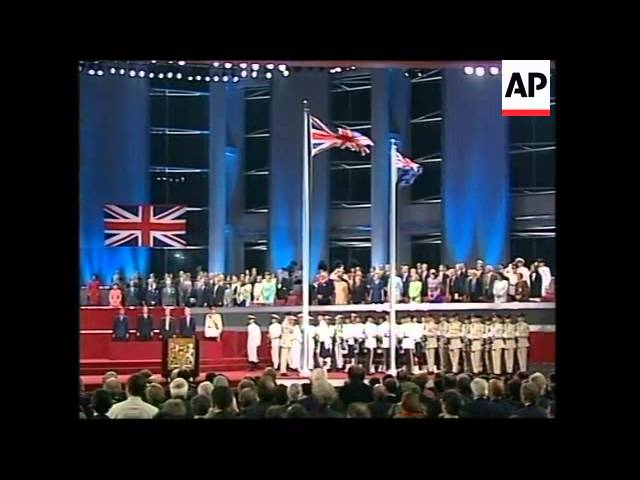
The official handover ceremony took place on the night of June 30 and the early hours of July 1, 1997. The event was held at the Hong Kong Convention and Exhibition Centre and attended by high-profile dignitaries, including Prince Charles representing Queen Elizabeth II, and Chinese President Jiang Zemin.
The ceremony was a poignant and symbolic moment, featuring:
Lowering and Raising of Flags: The British Union Jack was lowered for the last time, and the flag of the People's Republic of China was raised, alongside the new flag of the Hong Kong Special Administrative Region (HKSAR).
Speeches: Leaders from both nations delivered speeches, emphasizing the importance of the handover and the future governance of Hong Kong. Prince Charles expressed hope for Hong Kong's continued prosperity and adherence to the agreements made, while Jiang Zemin reaffirmed China's commitment to the "one country, two systems" principle.
Transition of Power: The formal transfer of sovereignty was completed, and Hong Kong's first Chief Executive, Tung Chee-hwa, was sworn in, marking the beginning of local governance under Chinese sovereignty.
"One Country, Two Systems"
The "one country, two systems" framework, devised by Deng Xiaoping, was designed to ensure that Hong Kong's capitalist system and way of life would remain unchanged for 50 years after the handover. Key aspects included:
Autonomy: Hong Kong would enjoy a high degree of autonomy, except in foreign affairs and defense.
Legal System: Hong Kong retained its common law legal system, separate from the socialist legal system of mainland China.
Economic Independence: Hong Kong continued to operate as a separate customs territory and maintain its own financial system and currency.
Implications and Developments
The handover of Hong Kong had significant implications for both the city and the broader international community:
Economic Continuity: Hong Kong maintained its status as a global financial center, leveraging its unique position between East and West.
Political Tensions: Over the years, tensions arose over the extent of Hong Kong's autonomy. Issues such as the interpretation of the Basic Law (Hong Kong's mini-constitution) and electoral reforms led to pro-democracy protests and clashes with the mainland government.
Cultural Identity: The handover also sparked discussions about Hong Kong's cultural identity, as residents navigated the complex relationship between their British colonial past and Chinese sovereignty.
Legacy
The handover of Hong Kong remains a pivotal moment in modern history, symbolizing the end of British colonialism in Asia and the rise of China as a global power. It also set a precedent for the "one country, two systems" approach, which was later proposed for Taiwan.
The events of July 1, 1997, continue to shape Hong Kong's socio-political landscape, as debates over autonomy, democracy, and governance persist. The handover is remembered as both a moment of hope for a prosperous future and a point of contention regarding the balance between maintaining Hong Kong's distinct identity and integrating with mainland China.
#MomentsOfLife #MoofLife_Moment #MoofLife #HongKongHandover #1997 #OneCountryTwoSystems #BritishColonialHistory #ChineseSovereignty #GlobalHistory #AutonomyAndGovernance
Explore the Life Moments of
 AI Twin