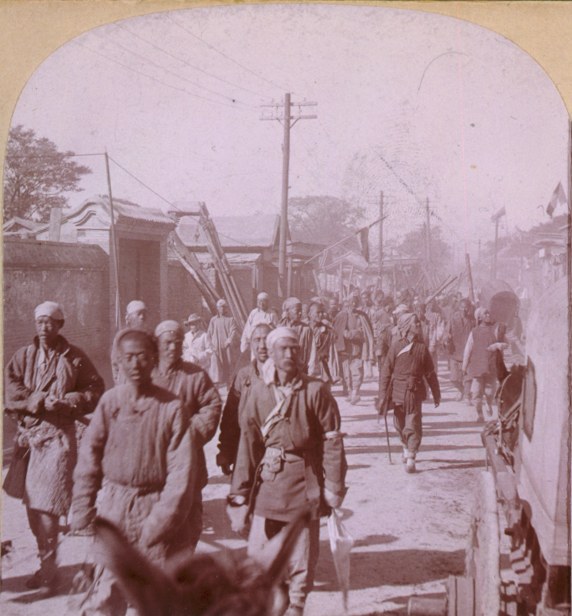
"Boxer Rebellion" in Northern China seeks to stifle reforms in the Qing administration, drive out foreigners and re-establish traditional rule.
China
10 min read
Updated By: History Editorial Network (HEN)
Published:
Updated:
The Boxer Rebellion, which began in 1899 in northern China, was a significant anti-foreign, anti-colonial, and anti-Christian uprising. This movement sought to drive out foreign influence, resist reforms in the Qing administration, and re-establish traditional Chinese rule. The rebellion highlighted the tension between modernization and traditionalism in China at the turn of the 20th century.
Background
The origins of the Boxer Rebellion can be traced to widespread social, economic, and political discontent in China. The country was suffering from the effects of drought, famine, and the imposition of unequal treaties by foreign powers. These treaties had forced China to cede territories, grant extraterritorial rights to foreigners, and open up ports for trade under unfavorable conditions. Additionally, Christian missionary activities were seen as undermining traditional Chinese culture and values.
The Boxers, officially known as the "Yihequan" (Righteous and Harmonious Fists), were a secret society that combined martial arts training with mystical beliefs, including the conviction that they could become invulnerable to bullets and other weapons through spiritual practices. They were primarily peasants who were deeply resentful of the foreign presence and the Qing dynasty's perceived inability to defend China’s sovereignty.
The Uprising
The rebellion began in earnest in 1899 when Boxers started attacking Chinese Christians and foreign missionaries in northern China. Their slogan, "Support the Qing, destroy the foreign," encapsulated their dual objectives: to reinforce the Qing dynasty against reformist pressures and to eradicate foreign influence from Chinese soil.
Key events in the uprising include:
Attacks on Foreigners and Chinese Christians: The Boxers targeted foreign nationals, missionaries, and Chinese converts to Christianity, whom they blamed for China's misfortunes. Violence quickly spread across the northern provinces.
Siege of the Legation Quarter: In June 1900, the Boxers laid siege to the foreign legation quarter in Beijing, where diplomats and civilians from various nations were trapped for 55 days. This event drew international attention and highlighted the severity of the situation.
The Qing Dynasty's Role
The Qing court, under Empress Dowager Cixi, initially vacillated in its response to the Boxers. However, as the rebellion gained momentum, the Qing government saw the Boxers as potential allies against foreign powers. In June 1900, the Qing officially supported the Boxers, declaring war on the foreign powers present in China.
International Intervention
The rebellion prompted a swift response from an international coalition, known as the Eight-Nation Alliance, comprising Japan, Russia, Britain, France, the United States, Germany, Italy, and Austria-Hungary. This alliance organized a military intervention to relieve the siege of Beijing and protect their nationals.
Key battles and outcomes of the intervention included:
Battle of Tientsin (Tianjin): The alliance captured the strategic city of Tianjin in July 1900, securing a crucial base for further operations.
Battle of Beijing: In August 1900, the multinational forces fought their way into Beijing, lifting the siege of the legation quarter and effectively ending the Boxers' military threat.
Aftermath
The defeat of the Boxers and the Qing forces led to severe repercussions for China. The Boxer Protocol, signed in September 1901, imposed harsh terms on the Qing government, including:
Indemnities: China was forced to pay large reparations to the foreign powers.
Punitive Measures: Boxer leaders and Qing officials who had supported the rebellion were executed or exiled.
Foreign Troops: Foreign military presence in China was increased to protect their nationals and interests.
Legacy
The Boxer Rebellion had profound and lasting impacts on China:
Increased Foreign Control: The rebellion led to greater foreign intervention and control over Chinese affairs, further weakening the Qing dynasty.
Reform and Revolution: The failure of the Boxers and the humiliating terms of the Boxer Protocol accelerated calls for reform and modernization within China. This discontent eventually contributed to the fall of the Qing dynasty in 1911 and the establishment of the Republic of China.
Nationalism: The rebellion sowed the seeds of Chinese nationalism, fostering a growing desire to resist foreign domination and restore China's sovereignty.
#MomentsOfLife #MoofLife_Moment #MoofLife #BoxerRebellion #China #QingDynasty #AntiColonialism #AntiImperialism #ChineseHistory #1900s #InternationalIntervention

Explore the Life Moments of
 AI Twin