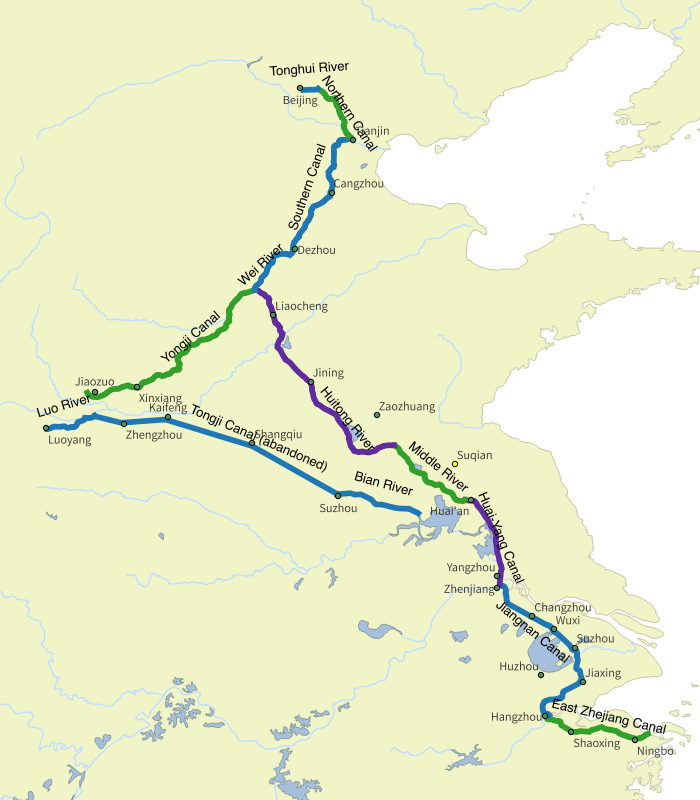
Ancient Grand Canal linking Beijing and Hangzhou for trade and transport
China
Global Trade
Economic Development
3 min read
Updated By: History Editorial Network (HEN)
Published:
The construction of the Grand Canal in China revolutionized trade and transportation. This ambitious project connected Beijing in the north to Hangzhou in the south, spanning over 1,100 miles. It linked the Yellow River and the Yangtze River, enabling goods to be transported efficiently across the country.
The Grand Canal played a crucial role in facilitating economic growth, cultural exchange, and political integration during ancient China. It allowed for the transportation of agricultural produce, raw materials, and manufactured goods, fostering regional development and prosperity. The canal also enhanced communication between the north and south, promoting unity and stability in the vast empire.
This monumental undertaking involved millions of laborers and lasted for several years. It required sophisticated engineering techniques, including the construction of locks, dams, and bridges. The Grand Canal became a symbol of China's ingenuity and determination to overcome geographical challenges for the benefit of its people.
The completion of the Grand Canal was a watershed moment in Chinese history, shaping the country's landscape and fostering economic development for centuries to come. Its impact on trade and transportation was profound, laying the foundation for China's status as a global economic powerhouse.
#GrandCanal #TradeRoutes #ChineseHistory #InfrastructureDevelopment

Explore the Life Moments of
 AI Twin