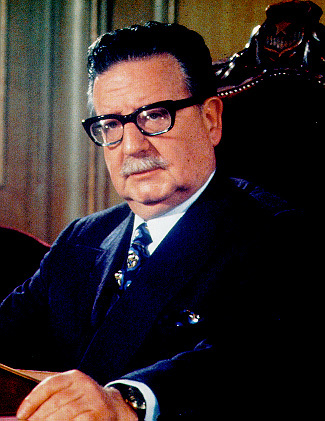
Presidency of Salvador Allende
Chile

Political
3 min read
Updated By: History Editorial Network (HEN)
Published:
The Allende Government marked a significant shift in Chile's political landscape. It brought Salvador Allende, a socialist leader, to power, making him the first Marxist to be democratically elected as president in Latin America. Allende's government initiated various reforms aimed at reducing social inequality, nationalizing industries, and improving access to healthcare and education for all citizens. One of the most notable policies was the nationalization of the copper industry, a move that was met with both domestic support and international criticism.
The Allende Government faced challenges from various fronts, including opposition from right-wing groups, economic turmoil, and growing tensions with the United States. These factors eventually led to a coup d'état in which Allende was overthrown and replaced by a military junta led by General Augusto Pinochet. The violent military coup marked the end of Allende's government and the beginning of a dark period of dictatorship in Chile.
Despite its abrupt end, the Allende Government left a lasting impact on Chilean society. It sparked debates on the role of the state in the economy, the rights of the working class, and the limits of democracy. The legacy of Allende's government continues to influence political discussions in Chile to this day, serving as a beacon for progressive movements seeking social justice and equality. #AllendeGovernment #ChileanPolitics #SocialReforms #CoupDetat #Legacy

Explore the Life Moments of
 AI Twin