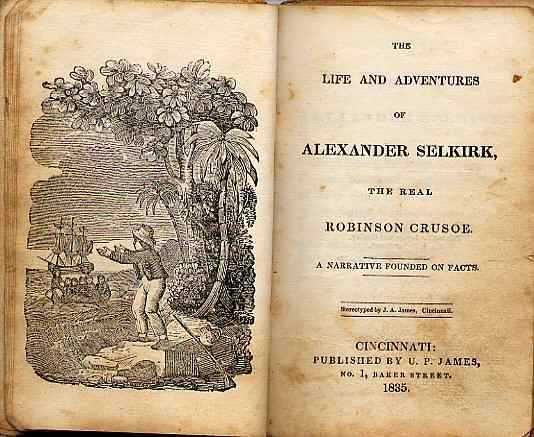
Alexander Selkirk, the inspiration for Defoe's "Robinson Crusoe", is rescued.
Chile
6 min read
Updated By: History Editorial Network (HEN)
Published:
In 1709, the story of Alexander Selkirk, a Scottish sailor, reached a pivotal moment when he was rescued from the Juan Fernández Islands off the coast of Chile. Selkirk's extraordinary experience of survival became the inspiration for Daniel Defoe's classic novel, "Robinson Crusoe," published in 1719.
Background
Alexander Selkirk, born in 1676 in Lower Largo, Scotland, was a navigator and privateer. In 1703, he joined an expedition led by Captain William Dampier to the South Seas. The voyage was fraught with difficulties, including conflicts among the crew and a poorly maintained ship, the Cinque Ports. In September 1704, after a severe disagreement with Captain Thomas Stradling, Selkirk chose to be marooned on the Juan Fernández Islands rather than continue on the unseaworthy vessel.
Life on the Island
Selkirk's solitary existence on the island, which lasted four years and four months, was marked by ingenuity and resilience. Initially, he suffered from isolation and despair, but gradually, he adapted to his environment:
Shelter: He constructed two huts from pepper tree branches, using wild cabbage leaves as thatch.
Food: Selkirk subsisted on goats, fish, fruits, and vegetables. He domesticated feral cats to control the rat population and made clothing from goat skins.
Health: His health improved due to a diet free of alcohol and processed foods, combined with regular physical activity.
Selkirk's survival skills, honed during his time on the island, were instrumental in his eventual rescue. His experience underscored the themes of human endurance and self-reliance that Defoe later explored in his novel.
Rescue and Return
On February 2, 1709, the English privateer ship Duke, captained by Woodes Rogers and accompanied by Dampier, arrived at the Juan Fernández Islands. The crew was astonished to find Selkirk, who had become wild in appearance but retained his ability to speak English. Selkirk's knowledge of the islands proved invaluable to Rogers' crew, assisting them in navigating and provisioning.
Selkirk's rescue marked the end of his solitary ordeal and the beginning of a new chapter in his life. He rejoined the crew and continued privateering before returning to England in 1711. His remarkable story quickly spread, capturing the imagination of the public.
Legacy and Inspiration for "Robinson Crusoe"
Daniel Defoe's "Robinson Crusoe," published in 1719, drew heavily on Selkirk's experiences. While the novel fictionalized and embellished many aspects, the core narrative of a man marooned on a deserted island for an extended period was directly inspired by Selkirk. "Robinson Crusoe" became one of the most widely read novels in history, cementing Selkirk's legacy in literary and cultural history.
#MomentsOfLife #MoofLife_Moment #MoofLife #AlexanderSelkirk #RobinsonCrusoe #Survival #Adventure #LiteraryInspiration #JuanFernándezIslands #1709

Explore the Life Moments of
 AI Twin