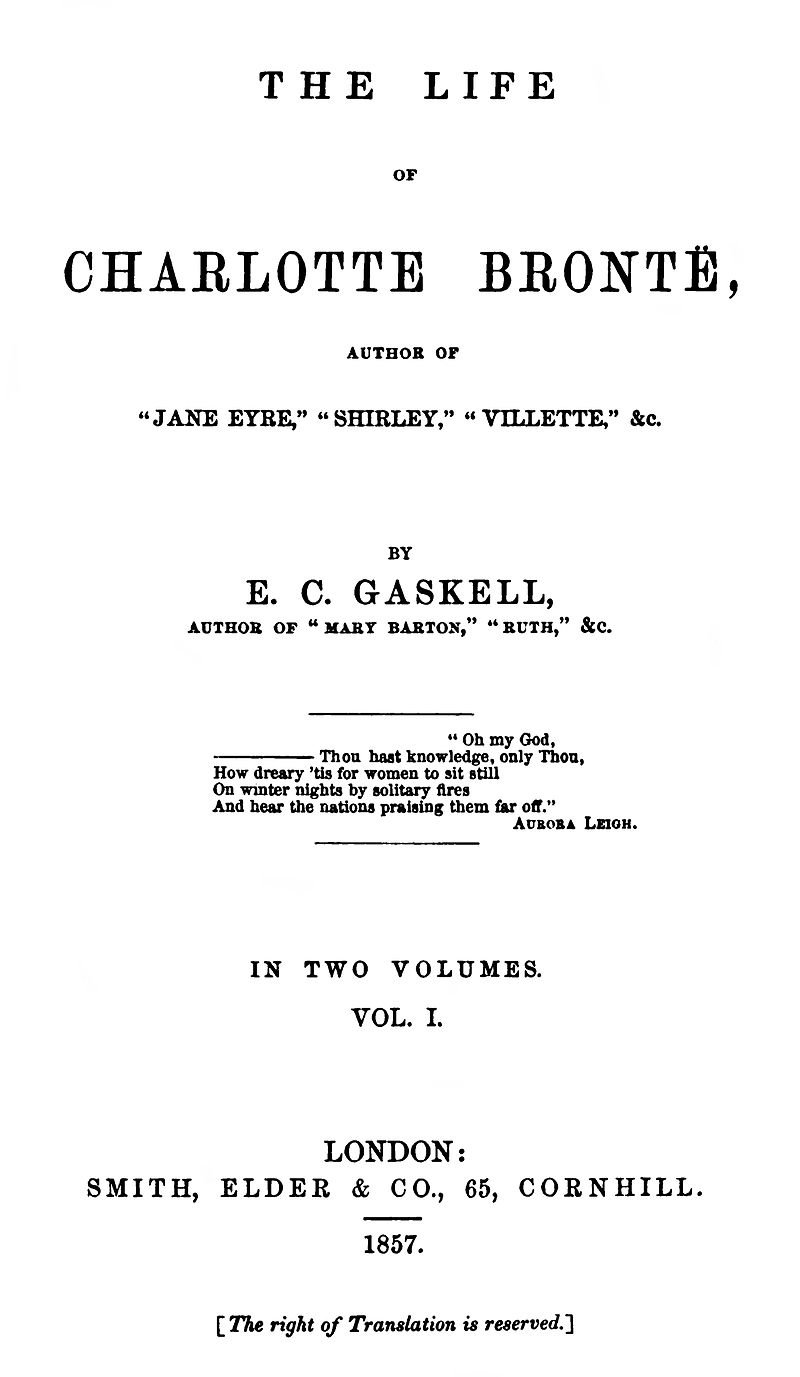
Publication of The Life of Charlotte Brontë
England
Literature
Biography
Women's Studies
3 min read
Updated By: History Editorial Network (HEN)
Published:
Updated:
The publication of Elizabeth Gaskell's biography, The Life of Charlotte Brontë, marked a notable moment in literary history, as it was one of the first instances of a prominent female novelist writing about another. Gaskell's approach diverged from traditional biographical methods by focusing on the private life of Charlotte Brontë rather than her literary accomplishments. This emphasis on personal details was intended to counteract the criticisms of 'coarseness' that had been directed at Brontë's writing. Gaskell's narrative included frank discussions about Charlotte's life, yet it notably omitted sensitive topics, such as her affection for Constantin Heger, a married man, which could have been seen as scandalous and distressing to Charlotte's family and friends. This selective portrayal raised questions about the accuracy and completeness of Gaskell's account, particularly regarding the depiction of Charlotte's father, Patrick Brontë, and his parenting practices, which were challenged by evidence from Emily Brontë's diary entries. Furthermore, Charlotte expressed her dissatisfaction with Gaskell's portrayal, feeling that it painted her as weak and dependent, rather than as a capable individual. This biography not only shaped public perception of Charlotte Brontë but also initiated a trend of focusing on the private lives of literary figures, potentially overshadowing their literary contributions.
#mooflife
#MomentOfLife
#CharlotteBrontë
#ElizabethGaskell
#Biography
#LiteraryHistory
#FemaleNovelists
Primary Reference
The Life of Charlotte Brontë

Explore the Life Moments of
 AI Twin