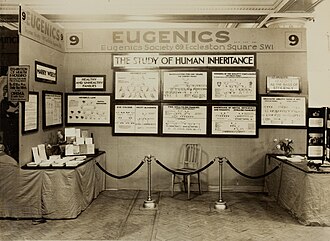
The Rise of Eugenics: Influenced by Darwin's ideas, movements sought human improvement through selective breeding.
United Kingdom
Science
Political
5 min read
Updated By: History Editorial Network (HEN)
Published:
Updated:
In the late 19th century, the development of eugenics movements marked a pivotal juncture in the history of social and biological thought. These movements began to draw heavily on the concepts rooted in Charles Darwin's theory of evolution, particularly the idea of natural selection. Proponents of eugenics argued that just as natural selection operated in the animal kingdom, so too could humans take an active role in guiding their own evolution.
The focus of these early eugenics movements was on biological inheritance and the possibility of voluntary improvement of the human race. Influenced by Darwin’s theories, eugenicists believed that desirable traits could be encouraged and undesirable ones could be reduced through careful planning and management of reproduction. This included promoting traits perceived as strong, intelligent, and healthy, and discouraging those regarded as weak or undesirable.
Eugenicists employed scientific language and methods to legitimize their goals, conducting studies and gathering data on human genetics and heritability. They sought to establish a scientific basis for their beliefs and to influence public policy. One significant application was the establishment of selective breeding practices, meant to foster better overall health and capabilities within human populations.
While initially rooted in voluntary measures and education, the movement laid the groundwork for more coercive practices. Over time, governments and institutions began to implement policies influenced by eugenic ideas, such as sterilization programs and restrictive marriage laws.
The impact of eugenics on society was profound and controversial. It led to significant ethical, scientific, and social debates, challenging the boundaries between nature and nurture, freedom and control. These movements also contributed to deeply problematic ideologies associating genetic superiority with race, class, and other social hierarchies.
In summation, the ideas propagated by the early eugenics movements, drawing on Darwinian evolution, set the stage for a range of social policies and ethical considerations regarding human reproduction and heredity.
#MoofLife #Eugenics #Darwinism #BioEthics #Genetics #SocialPolicy
Explore the Life Moments of
 AI Twin