Darwin's Revolutionary Research on Cocos Islands: Atolls, Evolution, and Natural Selection
United Kingdom
Science
4 min read
Updated By: History Editorial Network (HEN)
Published:
Updated:
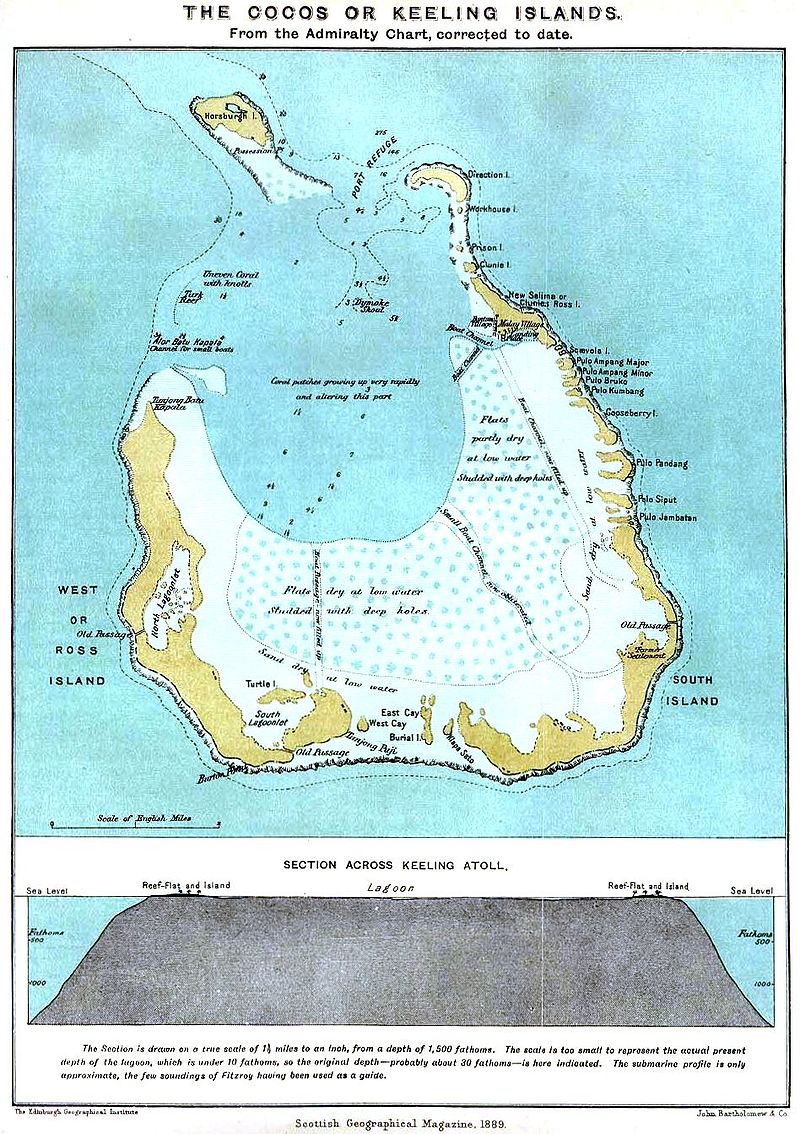
Charles Darwin's visit to the Cocos (Keeling) Islands during his voyage on the HMS Beagle marked an important chapter in his scientific studies. The Cocos (Keeling) Islands are a group of coral atolls located in the Indian Ocean. This visit provided Darwin an opportunity to observe coral reefs firsthand, which subsequently influenced his theory of atoll formation.
Darwin's observations were detailed and methodical. He noted that the islands are composed primarily of coral and concluded that they had formed around extinct volcanoes. This process, he theorized, involved coral growth along a sinking volcanic island, eventually creating a ring-shaped structure known as an atoll. His observations were critical in understanding the geological processes that form coral atolls. This theory addressed how coral reefs can exist in mid-ocean locations, far from any land masses.
The data collected during this expedition played a key role in Darwin's scientific conclusions. The comprehensive documentation of flora and fauna, as well as geological formations, reinforced his growing understanding of natural processes. Additionally, Darwin’s observation of the diversity of species and the ecological dynamics within the atoll fostered his thoughts on adaptation and survival, which later contributed to his formulation of the theory of natural selection.
The impact of Darwin’s work on the Cocos (Keeling) Islands extended beyond geology, influencing the broader scientific community's approach to studying natural phenomena. It also underscored the importance of direct observation and evidence collection in scientific inquiry and set a precedent for future naturalists.
#CharlesDarwin #AtollFormation #NaturalHistory #CoralReefs #ScienceVoyage #MoofLife
Explore the Life Moments of
 AI Twin