Darwin's Pangenesis Hypothesis: A Milestone in Inheritance Research
United Kingdom
Science
Genetics
Evolution
4 min read
Updated By: History Editorial Network (HEN)
Published:
Updated:
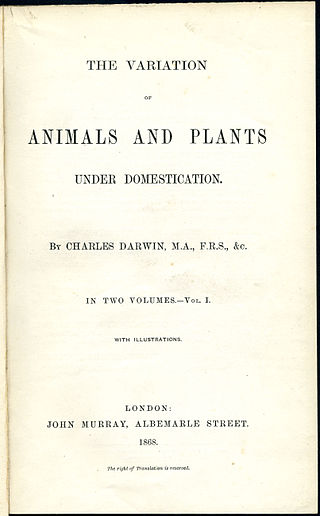
After years of dedicated research and observation, Charles Darwin published 'The Variation of Animals and Plants Under Domestication.' In this work, Darwin introduced his hypothesis of pangenesis. This hypothesis sought to explain the process of inheritance, which had puzzled scientists for generations. Darwin proposed that tiny particles, which he called 'gemmules,' were responsible for passing on traits from parents to offspring. These gemmules were thought to be shed by all parts of the organism and collected in the reproductive organs.
The publication contributed significantly to the field of genetics, laying a foundational concept that stimulated further scientific inquiry in hereditary mechanisms. At the time, the understanding of inheritance was limited, and Darwin's hypothesis provided a new framework for considering variation in species. Although the concept of pangenesis was later replaced by more accurate genetic theories, it was an important stepping stone in the quest to understand biological inheritance.
'The Variation of Animals and Plants Under Domestication' also documented extensive cases of domestication, detailing the changes that species undergo under human influence. This comprehensive work added valuable data to the body of knowledge on artificial selection, providing evidence that supported natural selection by analogy.
While the hypothesis of pangenesis did not endure, the endeavor underlined Darwin's commitment to exploring and explaining natural phenomena, and it propelled subsequent research that eventually led to the modern science of genetics.
#Darwin #Genetics #Pangenesis #Inheritance #Evolution #ScienceHistory #MoofLife
Explore the Life Moments of
 AI Twin