Darwin's Evolutionary Theory: Malthus' Influence on Natural Selection
United Kingdom
Science
Evolution
4 min read
Updated By: History Editorial Network (HEN)
Published:
Updated:
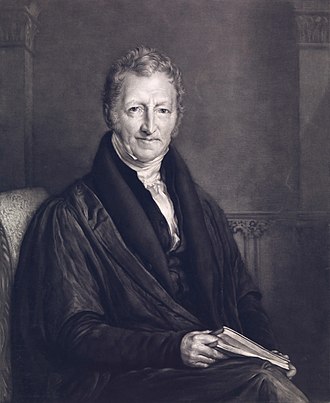
Charles Darwin, in his early scientific endeavors, meticulously examined the work of various scholars who preceded him. Among these, the writings of Thomas Malthus profoundly influenced his thinking. Malthus, an influential economist, posited that populations have the potential to grow exponentially while resources increase linearly, leading to inevitable shortages and competition for survival.
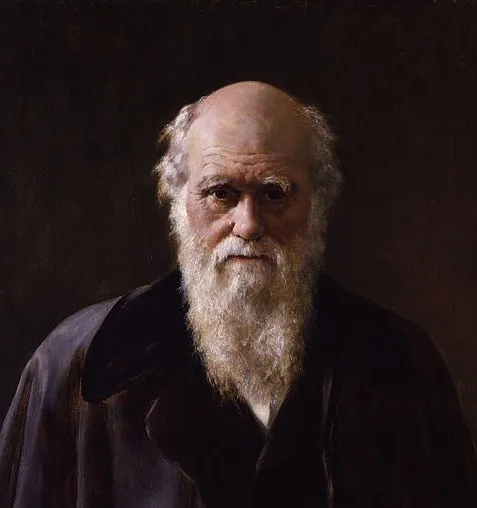
Darwin's encounter with Malthusian ideas on population dynamics provided him with critical insights during his exploration of species variation under domestication. He noted that breeders intentionally selected certain traits to propagate, effectively changing the characteristics of domesticated species over generations. Darwin began to see a parallel in nature: if all organisms have the potential for high fertility, but resources are limited, it would lead to a struggle for existence where only the most adapted organisms survive. This differential survival could lead to gradual changes in the species—a process Darwin later coined as natural selection.
This realization was crucial because it provided a plausible mechanism for evolution, a topic widely debated at the time. Darwin’s insight bridged the gap between Malthusian principles and the observable outcomes under selective breeding, helping him formulate the foundation for his theory of natural selection.
Darwin’s synthesis of these ideas expanded the understanding of how species evolve over time through natural processes, without the need for directed human intervention. This understanding later became instrumental to the publication of 'On the Origin of Species', a seminal work that fundamentally altered the biological sciences.
#ScientificBreakthrough #MalthusianTheory #NaturalSelection #TheoryOfEvolution #LifeScience #Darwin #EvolutionaryBiology #HistoryOfScience #MoofLife
Explore the Life Moments of
 AI Twin