Darwin's Agnostic Stance in Science and Religion
United Kingdom
Science
Religion
4 min read
Updated By: History Editorial Network (HEN)
Published:
Updated:
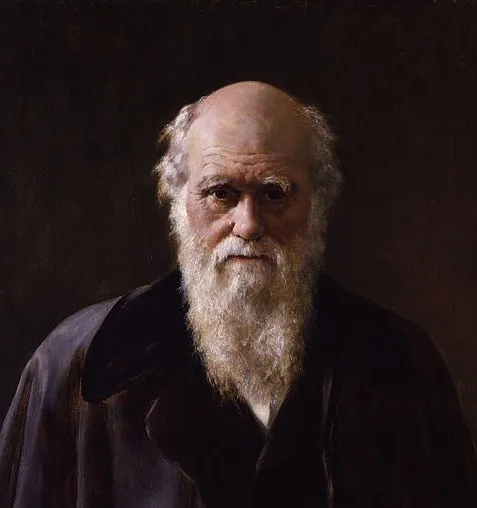
Charles Darwin, known for his contributions to the science of evolution, articulated his religious views, defining himself as agnostic rather than atheist. He stated this in correspondence where he clarified his stance on the existence of a deity. This self-description was significant, given Darwin's profound influence on scientific thought. Darwin's theory of natural selection, initially introduced in "On the Origin of Species," had already sparked debates, harmonizing or conflicting with various religious beliefs. His stance as agnostic indicated a critical perspective that neither affirmed nor denied the presence of God, reflecting his commitment to empirical evidence and skepticism of unfounded claims.
This declaration was essential in the broader discourse between science and religion. It illustrated that one could contribute significantly to science without entirely rejecting religious considerations, thereby appealing to a broader audience worried about the atheistic implications of evolutionary theory. Darwin's view helped bridge understanding between scientific inquiry and personal belief systems, emphasizing that scientific findings did not necessarily negate religious faith.
Darwin's nuanced perspective on religion had a lasting impact. It fostered dialogue and reduced tensions between scientific and religious communities, allowing for more open-minded interpretations and acceptance of evolutionary theory among theists. His religious views, framed within the context of agnosticism, underscored the empirical values of science while acknowledging the limits of human knowledge regarding the divine.
#CharlesDarwin #Evolution #ScienceAndReligion #Agnosticism #NaturalSelection #BridgeBuilding #HistoryOfScience #MoofLife
Explore the Life Moments of
 AI Twin