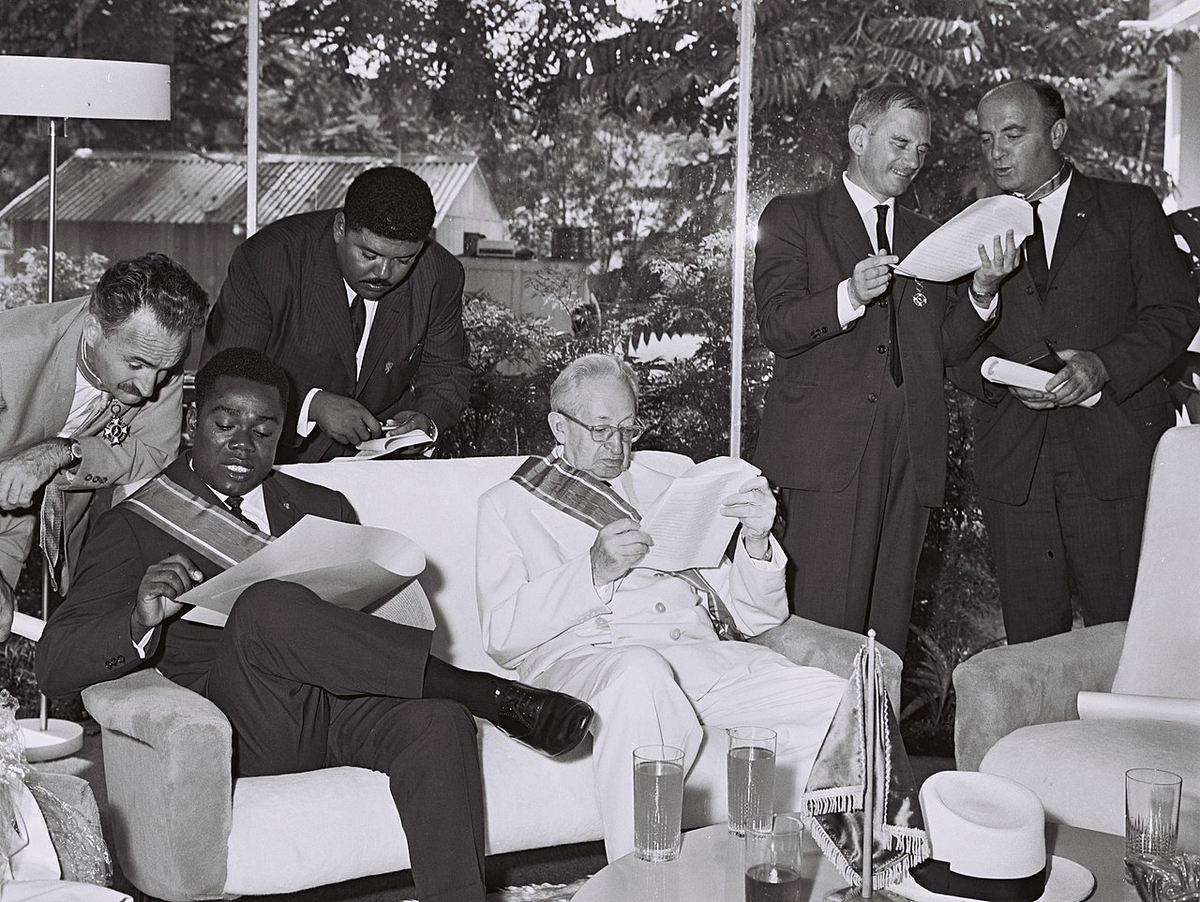
President Dacko ousted by army commander Kolingba in coup.
Central African Republic
Political
3 min read
Updated By: History Editorial Network (HEN)
Published:
In Sep 1981, the Central African Republic witnessed a significant political upheaval as the army commander, Andre Kolingba, led a coup that deposed President David Dacko. The coup took place amidst growing dissatisfaction with Dacko's leadership, characterized by economic instability and allegations of corruption.
Kolingba's rise to power marked a shift in the country's political landscape, with the military assuming control of the government. Under Kolingba's leadership, the country experienced a period of authoritarian rule, marked by suppression of political opposition and limited civil liberties.
The coup led by Kolingba had far-reaching impacts on the Central African Republic, affecting its governance and international relations. The country's economy faced further challenges due to political instability and lack of effective leadership.
The events surrounding Dacko's ousting by Kolingba underscored the volatile nature of politics in the Central African Republic and the influence of the military in shaping its political trajectory.
#CentralAfricanRepublic #Coup #MilitaryRule #PoliticalInstability
Primary Reference
Central African Republic profile - Timeline - BBC News
Explore the Life Moments of
 AI Twin