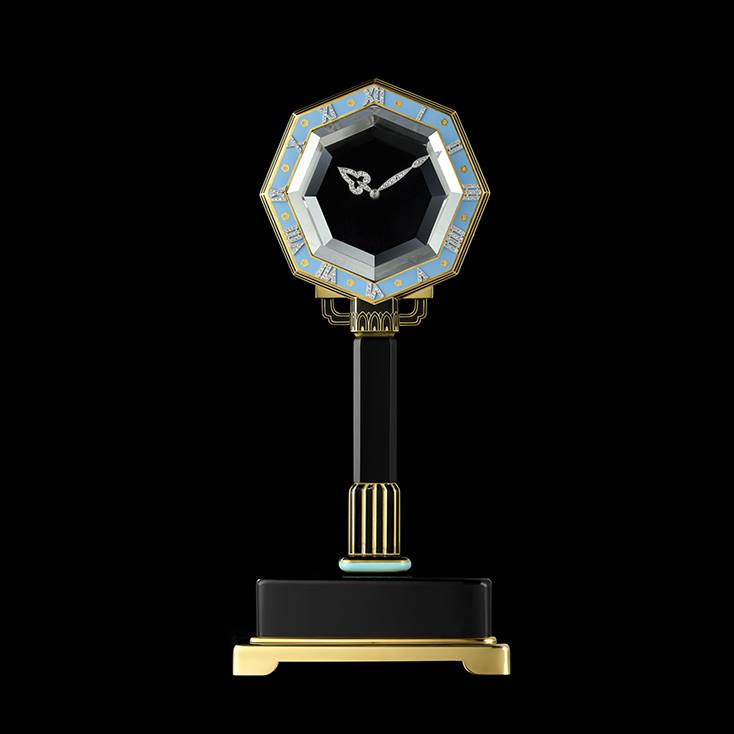
Creation of first portico mystery clock
France
Luxury Goods
Watches
Artistic Design
4 min read
Updated By: History Editorial Network (HEN)
Published:
Updated:
The creation of the first portico mystery clock marked a notable advancement in horological design and craftsmanship. This clock was distinguished by its unique aesthetic and engineering, featuring a portico structure that provided a classical architectural element to its design. The clock was topped with a statuette known as Billiken, which added a whimsical touch to the overall appearance. The mystery clock concept, which originated from the idea of creating timepieces where the movement was hidden, allowed for a more visually striking presentation. This innovation not only showcased Cartier's commitment to artistry but also their ability to blend functionality with decorative elements. The portico mystery clock exemplified the brand's pioneering spirit in the luxury watch and clock market, setting a precedent for future designs that would continue to captivate collectors and enthusiasts alike.
The impact of the portico mystery clock extended beyond its immediate aesthetic appeal. It represented a shift in the perception of clocks from mere timekeeping devices to intricate works of art. This transformation was significant in the luxury market, where craftsmanship and design became paramount. The introduction of such innovative designs contributed to Cartier's reputation as a leader in the luxury goods sector. The clock's unique features and the incorporation of artistic elements into functional objects resonated with consumers, leading to increased interest in high-end timepieces. As a result, the portico mystery clock not only enhanced Cartier's portfolio but also influenced the broader landscape of luxury horology, encouraging other manufacturers to explore creative designs that combined art and technology.
#mooflife
#MomentOfLife
#Cartier
#PorticoMysteryClock
#LuxuryHorology
#BillikenStatuette
#InnovativeClockDesign

Explore the Life Moments of
 AI Twin