Carl Sagan's "Cosmos" Wins Hugo Award for Best Science Communication Book
United States of America
Science
Entertainment
4 min read
Updated By: History Editorial Network (HEN)
Published:
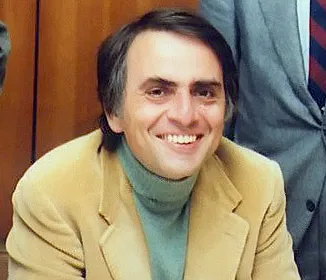
In a remarkable milestone for science communication, Carl Sagan received the Hugo Award for Best Related Non-Fiction Book for "Cosmos." The book, a companion to the groundbreaking television series, aimed to elucidate complex scientific concepts to the general public. Sagan's work succeeded in bridging the gap between science and popular culture, demonstrating the universe's wonders in an accessible manner.
The Hugo Award, which honors excellence in the field of science fiction and related genres, recognized "Cosmos" not only for its educational value but also for its ability to inspire a sense of wonder about the universe. The book compiled a wealth of information, ranging from the origin of life on Earth to the possibility of extraterrestrial life, reflecting Sagan's passion for both science and humanity's place in the cosmos.
"Cosmos" had an immediate and profound impact. It became a best-seller and was translated into multiple languages, broadening its reach and influence. The success of the book and the television series also established Sagan as a prominent figure in the scientific community and popular culture.
The award underscored the importance of making science approachable to the public and validated the necessity of initiatives aimed at improving scientific literacy. Carl Sagan's "Cosmos" remains a seminal work in science communication, continuing to inspire curiosity and exploration.
#ScienceCommunication #CarlSagan #Cosmos #HugoAward #Space #MoofLife
Primary Reference
1981 Hugo Awards | The Hugo Award
Explore the Life Moments of
 AI Twin