Career setback at Harvard redirected Carl Sagan's illustrious journey towards greater influence.
United States of America
Science
4 min read
Updated By: History Editorial Network (HEN)
Published:
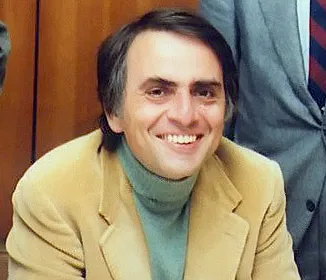
Carl Sagan, renowned for his contributions to astronomy and his role as a science communicator, faced a career setback at Harvard University when he was denied academic tenure. Tenure, a prestigious and secure position within academia, eluded Sagan despite his notable scientific work and teaching popularity. This decision came at a time when Sagan had already made significant contributions to planetary science, including research on the atmospheres of Venus and Mars and the seasonal changes on Mars' surface.
His work extended beyond pure research; he was also dedicated to public education in science, expressing the importance of understanding our universe through numerous publications and lectures. Despite these accomplishments, the tenure committee's decision did not favor Sagan, which led to his departure from Harvard. This moment marked a critical juncture in Sagan's career, prompting him to join Cornell University. At Cornell, Sagan continued to thrive, eventually becoming a full professor and significantly advancing both his scientific and public communication efforts.
This denial did not hamper Sagan's illustrious journey but instead redirected it, ultimately contributing to his broader influence in both scientific and popular realms. His ability to engage the public and his contributions to space exploration and science education, such as his involvement with missions like Voyager and his groundbreaking book and television series, "Cosmos," underscored his resilience.
#MoofLife #CarlSagan #Harvard #AcademicTenure #PlanetaryScience #CareerRedirection #ScienceEducation
Primary Reference
Carl Sagan: The People's Astronomer
Explore the Life Moments of
 AI Twin